Contents
Long-time readers and fellow inorganic chemistry appreciators probably already know about the halometallate ions and in particular, about a beloved long-time staple of hobbyist chemistry - the tetrachlorocuprate. The correct IUPAC-approved nomenclature for the ion is “tetrachloridocuprate” and it will be mentioned exactly once and then promptly forgotten and left in the annals of history even if it does convey slightly more information.
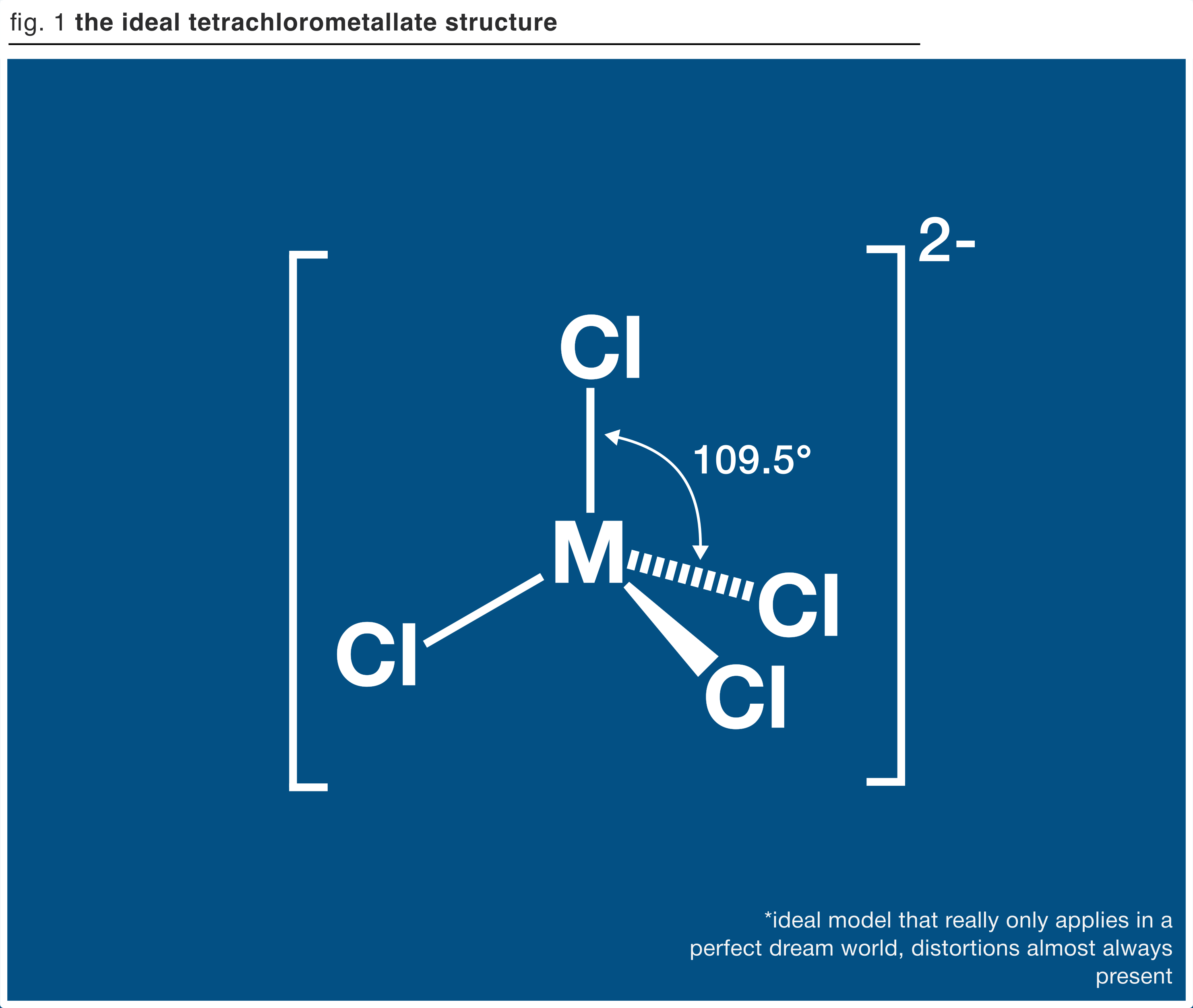
[CuCl4]2- in particular is beloved1 2 by amateurs3 because it’s not a very picky ion (stay around and you will find out why), and it will, in fact, crystallize with just about anything bulkier than Na+, which is definitely not the case with some of the metals that we will be looking at today.
In the parts of contemporary academia where the sun still shine and God’s Grace ain’t run dry yet you will most likely hear about halometallates not as “halometallates” per se, but by a name that was shamelessly stolen from a Calcium Titanate mineral - the Perovskite. Everyone’s favourite nanocrystal synthesis substrate is a structural twin of Calcium Titanate with the formula CsPbCl3 - a cesium lead trichloride. The compounds in this article are not perovskites but this does not stop the Materials Scientists from mashing them into the perovskite-shaped hole4. Good for them.
Why Pick Cesium?
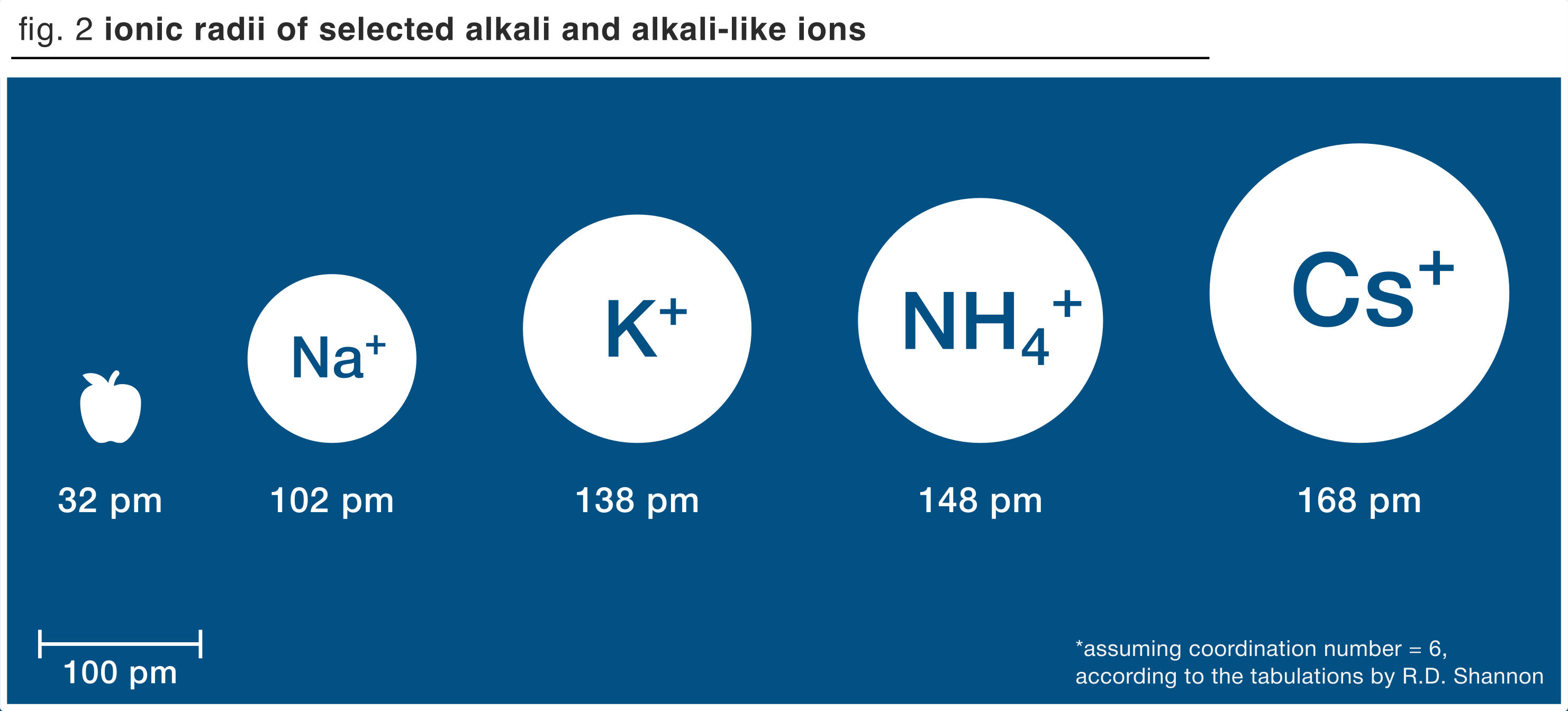
In today’s case cesium is an ion of interest purely due to its sheer size. If you look at the ionic radius of, for example K+ or NH4+ you will see that they sit at a quite small ~138 and 148 pm. Na+ is even smaller at 102 pm. Cs sits at a whole ~167 pm, among the biggest in the entire periodic table.
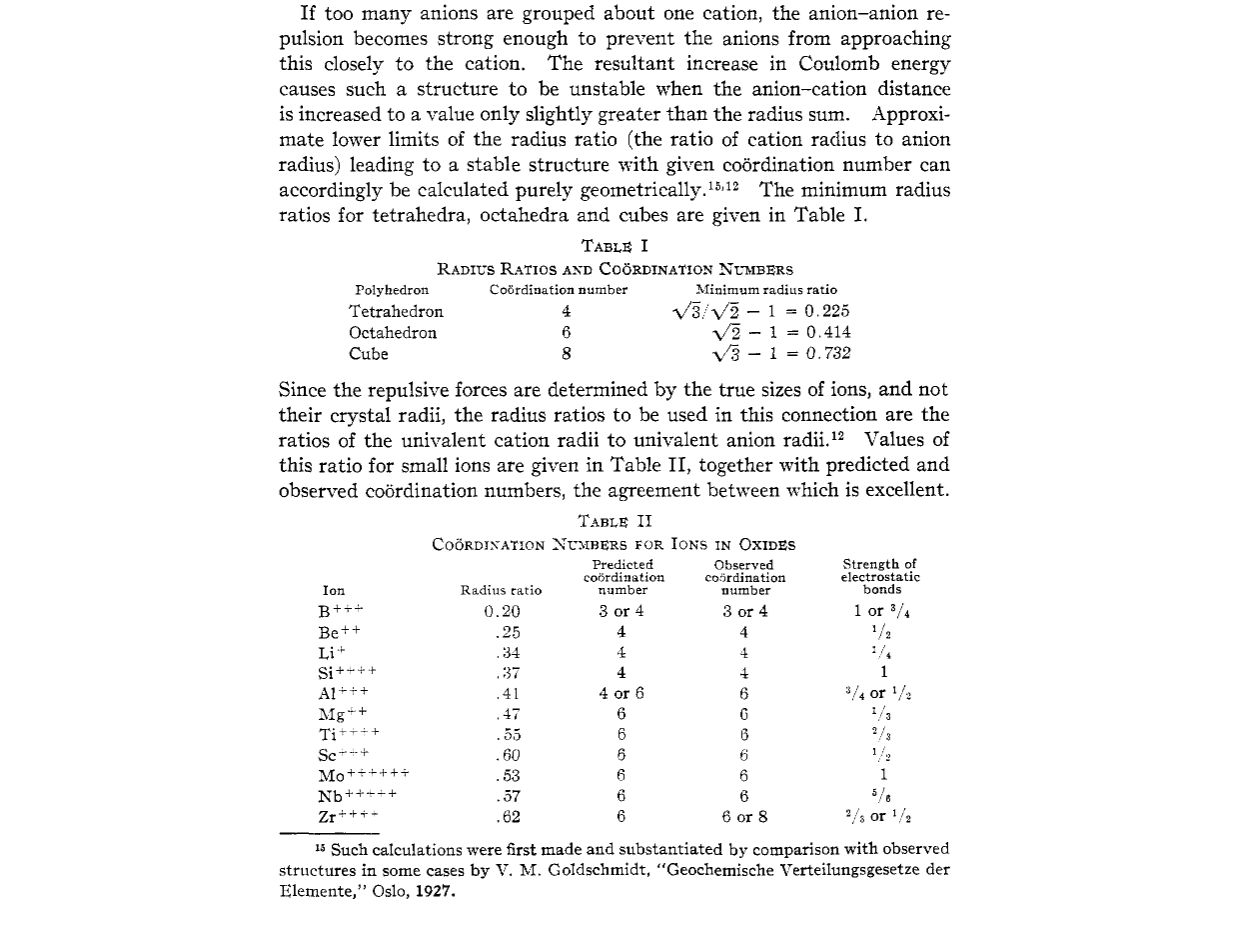
Because of the fact that Halogens are low-field ligands according to Crystal Field Theory (don’t worry if you don’t know this, a quick explainer is included in the article), the tetrahedral complexes of some metals are much more likely to form compared to similar Square Planar complexes. This is due to the low energy contribution of halides to CFSE, compared to something like cyanide. In such compounds, the geometry is largely decided by whatever’s near it in the lattice and also Sterics. These large, soft (only in the charge-radius meaning of it, they are quite structurally rigid, more on this later) complexes pack rather well with large counterions such as Cs+ or [N(Alk)4]+. Sometimes mathematicians (this happened twice to us before) complain that chemistry feels non-rigorous and hellishly empirical, and in these moments we understand5 that they might’ve been correct. The empirical rules that modern Perovskitologists use to estimate perovskite structure & stability are taken Straight From Geology6
But in the end, tetraalkylammoniums are poisonous, expensive and the suppliers that stock them refuse to ship to active warzones/outside of the eurozone, Cesium Carbonate was cheap off Onyxmet.
In addition to the preparation, each compound prepared during the course of this article has a little section on its applications in contemporary materials science & other fields, maybe one of those papers will be the topic for one of the next articles, maybe one of our wonderful readers can do something with one of them, who knows? We’d love to hear back if you do get inspired to make something of your own though.
Experimental Section
Every compound here was made with the same technique, some variation in molar ratios or evaporation rate notwithstanding. Working on such a small scale is generally an infuriating, Sisyphean at times endeavour and to prevent big losses during washing steps, ice cold HCl was used and the filtrations were carried out on the Tiniest Schott Funnels We Could Find.
The general outline was to dissolve 0.002 mol of Cs2CO3 (0.65 g) in a small amount of 15% hydrochloric acid (~9 ml or so) and then to add the equivalent amount of hydrated metal halide to it. With CsCl you will need to use a molar ratio of 2:1 CsCl:Metal Halide. This is then evaporated until only a few ml remain and set aside for crystallization. The lowest-loss method we found is to let it slowly evaporate to basically dryness and then to transfer it to a schott funnel by suspending it in isopropanol. The isopropanol wash is then followed by a wash with ice cold HCl for the removal of CsCl and is then followed by another IPA wash for dryness.
Cesium Tetrachlorocobaltate
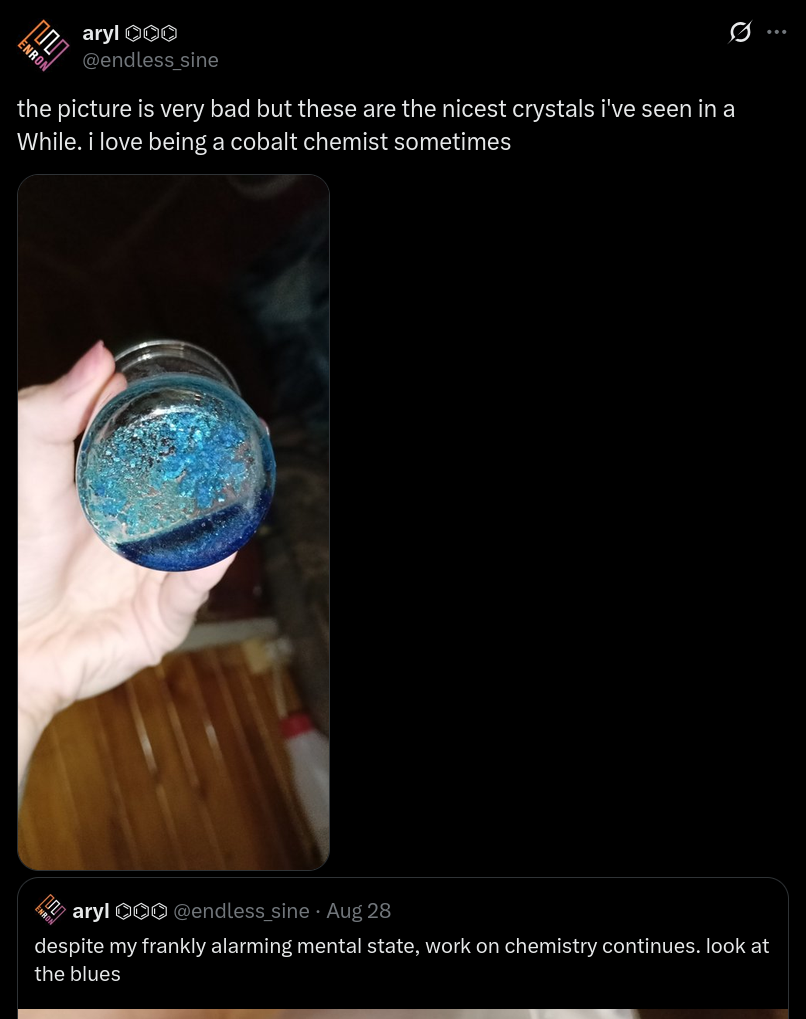
On the first small scale trial run of this synthesis the crystal crop that precipitated out was so big, shiny and beautiful7 that it temporarily awestruck us out of a week long depressive episode… The happiness was really short-lived (T1 of decay to CPTSD lattice approx 6 hours) and we had to involve psychiatric help just a week later. Mirtazapine 15mg really helped us to get this article out!
The second run was done with 0.002 mol of Cs2CO3 (0.65 g) and 0.002 mol of CoCl2 hexahydrate (0.474 g) and combined with the initial crop.
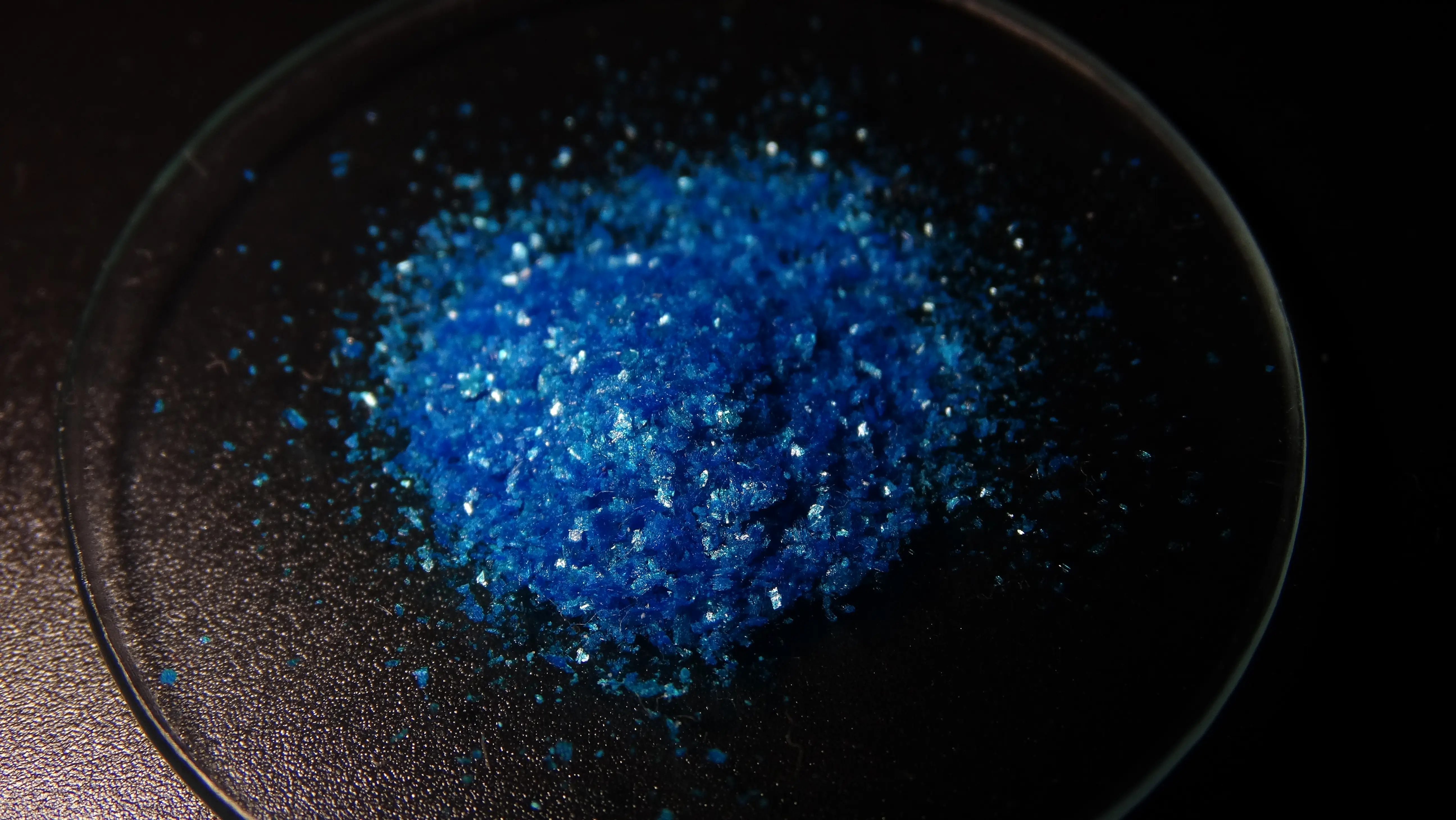
Cs2CoCl4 nanocrystals obtained via methods similar to those of perovskite nanocrystals are used as optical materials like x-ray scintillators8 and as a model for experimentally studying quantum entanglement via Inelastic Neutron Scattering spectroscopy, because it is a rather well behaved Quantum Magnet under certain conditions.9
Cesium Tetrachloronickelate
The most peculiar of the pure compounds in this entire article. Unlike every other complex, this one really does not like to exist at STP. First a closely related compound - the Trichloronickelate of Cesium is prepared by evaporating 0.0005 mol of Cs2CO3 (162 mg) in HCl with 0.001 mol of NiCl2 hexahydrate. Which is this boring yellow-tan compound that we didn’t bother to isolate in pure form.
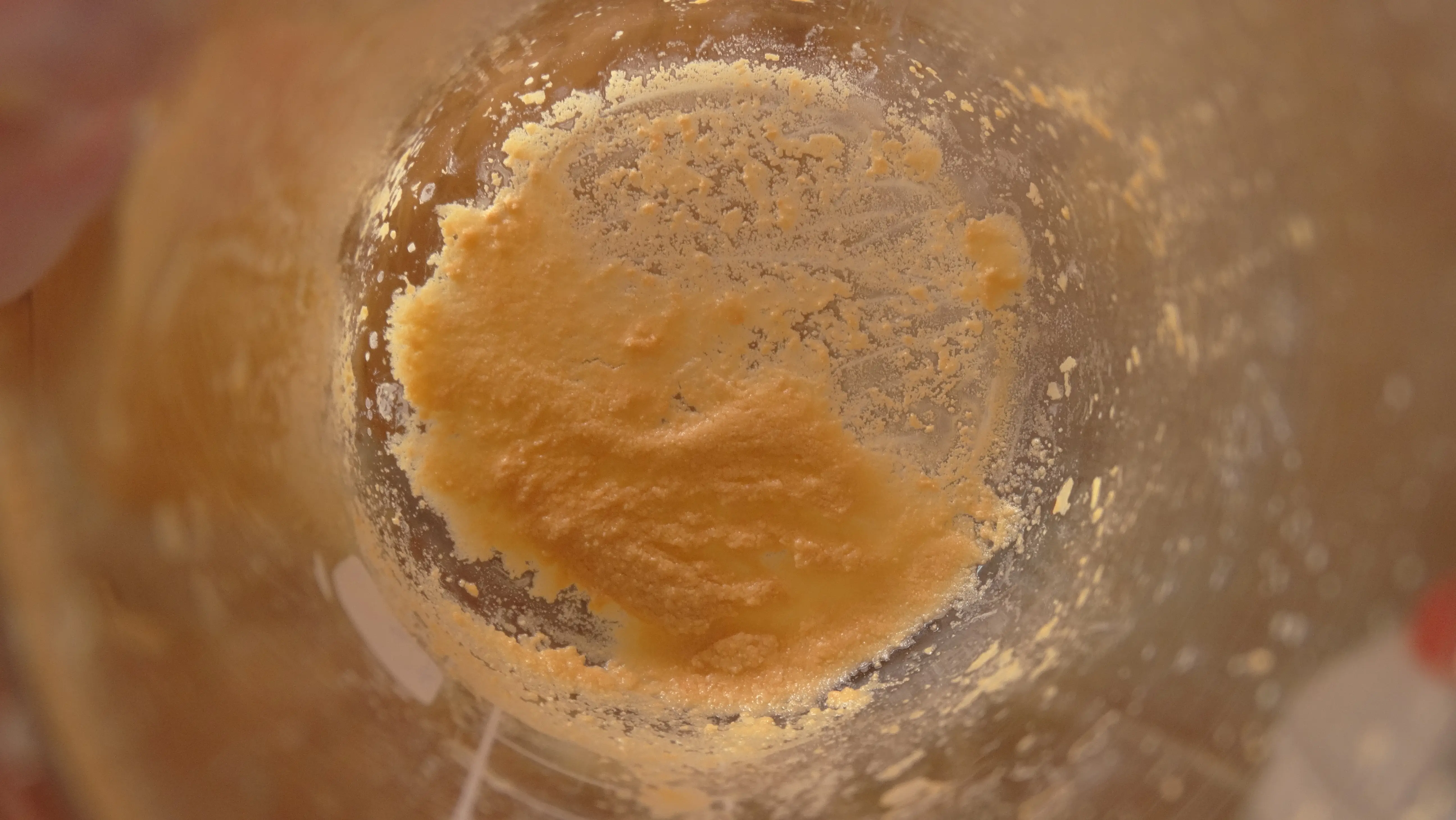
The same phase + extra CsCl are obtained when you try making Cs2NiCl4 with a 2:1 CsCl to NiCl2 molar ratio… But if you evaporate it dry, and then heat it even more you will see your mixture gradually turn a blue colour. We ran out of butane gas for our blowtorch right around this time so the heating was really uneven due to our application of a commercial gas stove instead. Here you can see the tan CsNiCl3 phase and the Blue Cs2NiCl4 phase coexist in the same crucible. On standing at room temp overnight this mixture reverted to being uniformly tan.
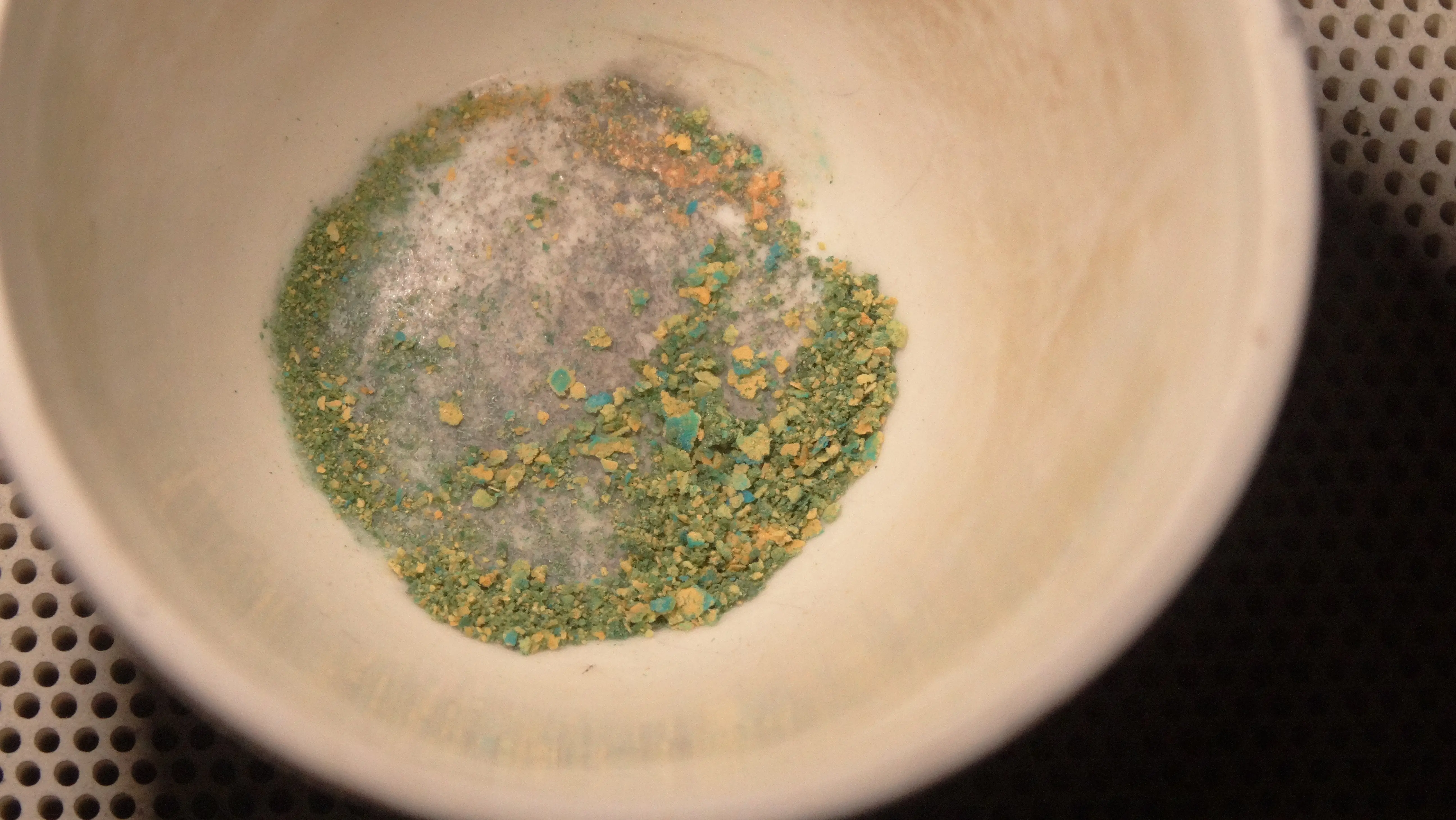
Cs2NiCl4 as a solid phase does not actually exist under 70 degrees celsius!10 A phase diagram at these low temperatures sadly could not be obtained. We assume this happens because at a higher temperature the crystalline lattice is shaken apart by vibrations just enough to allow the existence of the [NiCl4]2- tetrahedron.
Cs2NiCl4 due to its instability does not really have a sizeable materials science presence.. But doped CsNiCl3 nanocrystals sometimes do see use as an optical material11
Cesium Pentachloroferrate
Not a tetrahalometallate! Actually an octahedral complex with the formula [FeCl5(H2O)]. But since we’re doing the common transition metals - why not. Made from 0.65 g of Cs2CO3 (0.002 mol), ~ 5ml of HCl 15% and 0.5406 g of FeCl3 6H2O (0.002 mol).
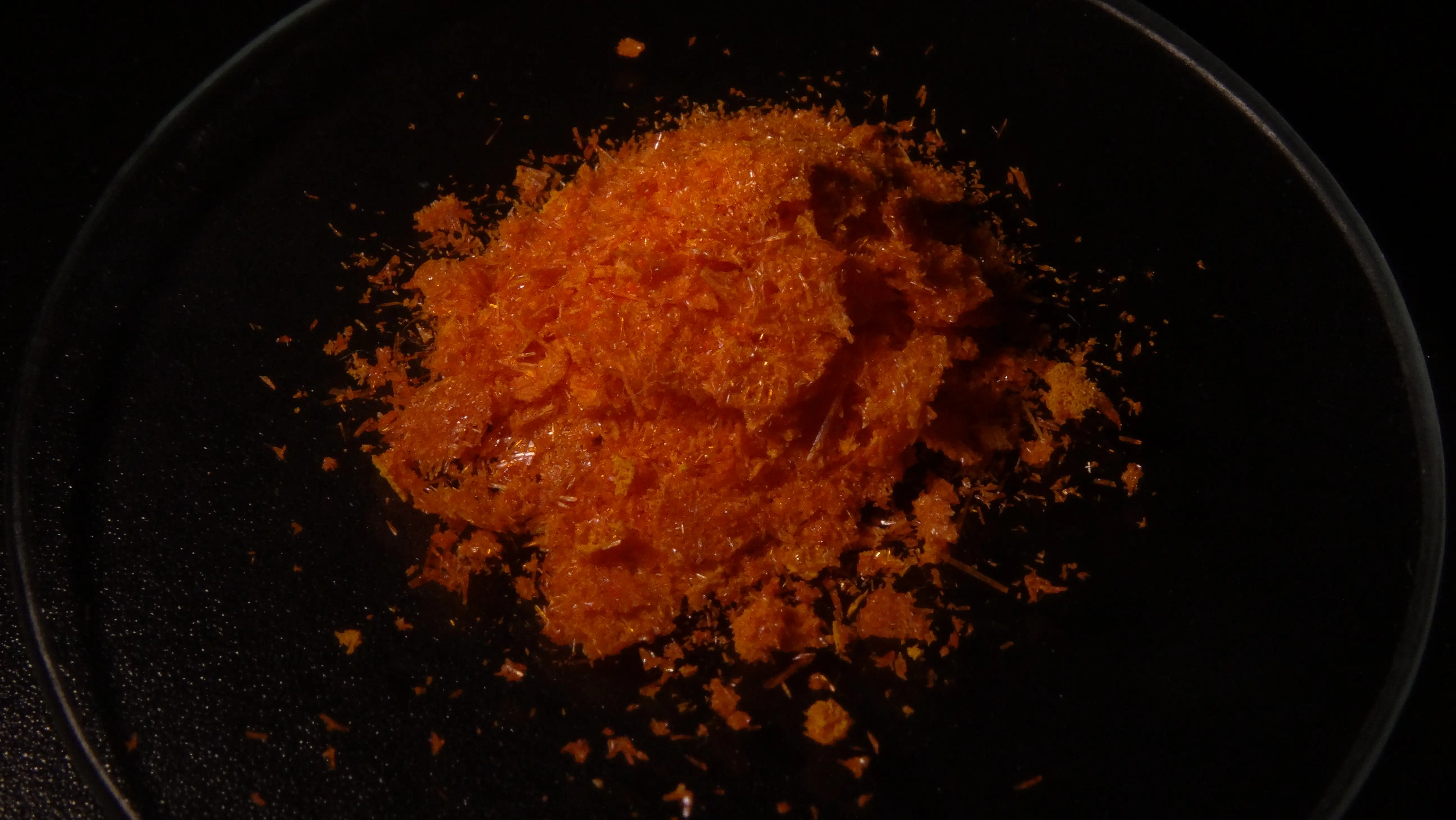
This sort of compound is much less studied than its tetrahedral relatives, but some research has been done into using Erythrosiderite structured materials for their use in semiconductors and optoelectronics.12 13
Cesium Tetrachloromanganate
The raw solid is actually not much of an event. The dilute solution is pink that turns more yellow when concentrated further to the point of the formation of [MnCl4]. The final product is a white crystalline powder that.. sortof fluoresces a very faint pink under intense UV illumination? What is happening here is either the very weak luminescence of the pure compound or the presence of some sort of impurity where the optical effect is way more pronounced. No pictures of fluorescence included due to time constraints but we might try to include it in either a supplement to this article or in the next article… Made with 0.65 g of Cs2CO3 (0.002 mol), 5 ml of HCl 15% and 0.396 g of MnCl2 4H2O (0.002 mol)
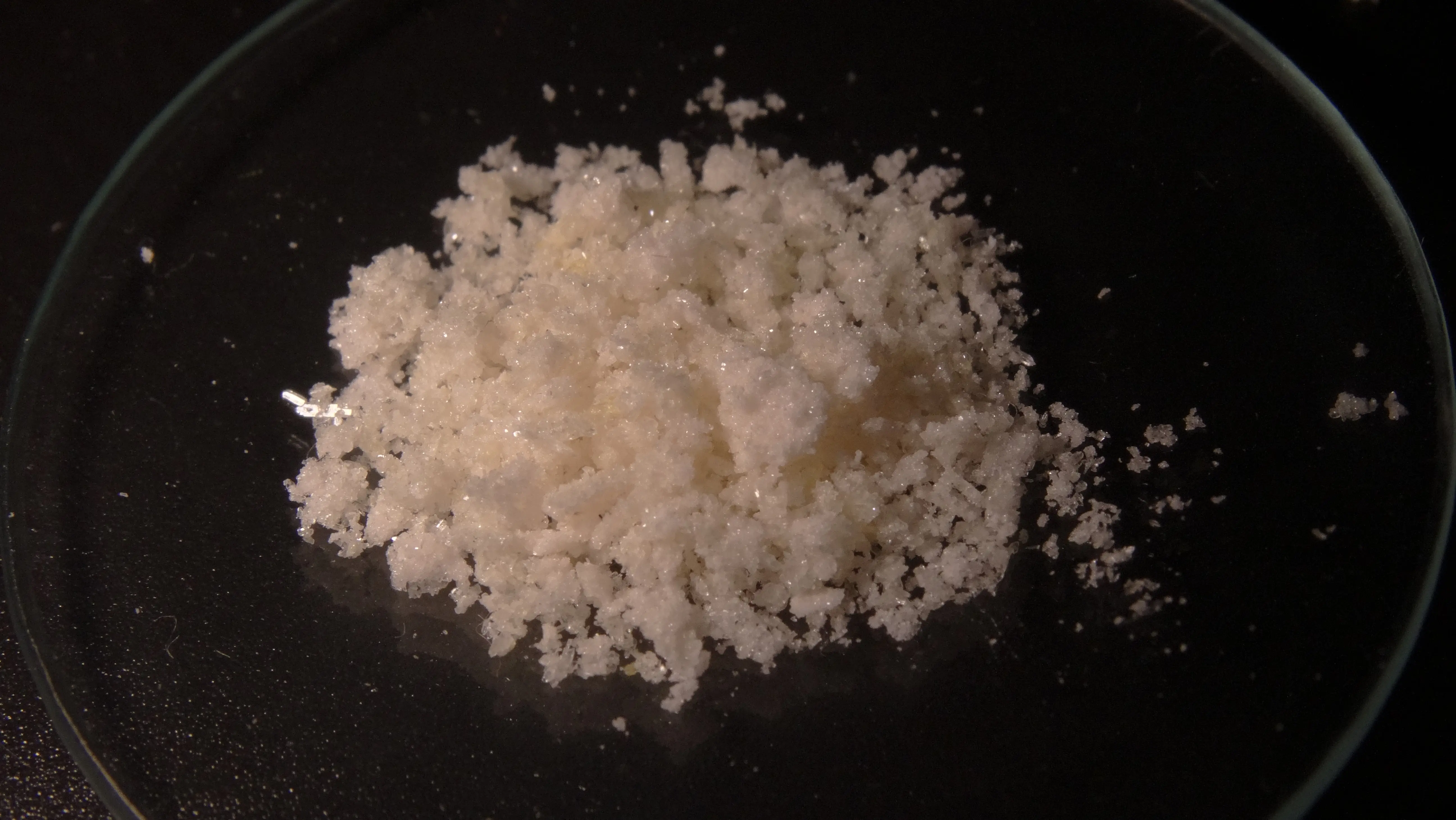
Though the pure compound is rather mundane, Doped Cesium Tetrachloromanganates pop up in the literature as pretty darn palatable optical materials. Cu+ doped Cs2MnCl4 has been noted to be a rather well-performing green emitter14 and Bi3+ doped Cs2MnCl4 has a pretty high emittance all the way into NIR15. Which, considering that it’s paired with a decent increase in Quantum Yield, is an impressive stokes shift (UV to NIR) for something that contains no rare earths. And Eu2+ doped Cs2MnCl416 is a single component (!) white emitter. Pretty stellar results for something not containing Copious Amounts of Rare Earths, Lead, Cadmium or Arsenic.
Cesium Tetrachlorocuprate
Synthesized from 170 mg of CuCl2 dihydrate (0.001 mol) and 325 mg (0.001 mol) of Cs2CO3 in the same small amount HCl, grows as brown-orange crystals, and notably as weird black filamentous growths too. Small yellow crystals were also obtained by neglecting the leftover solution and letting it evaporate
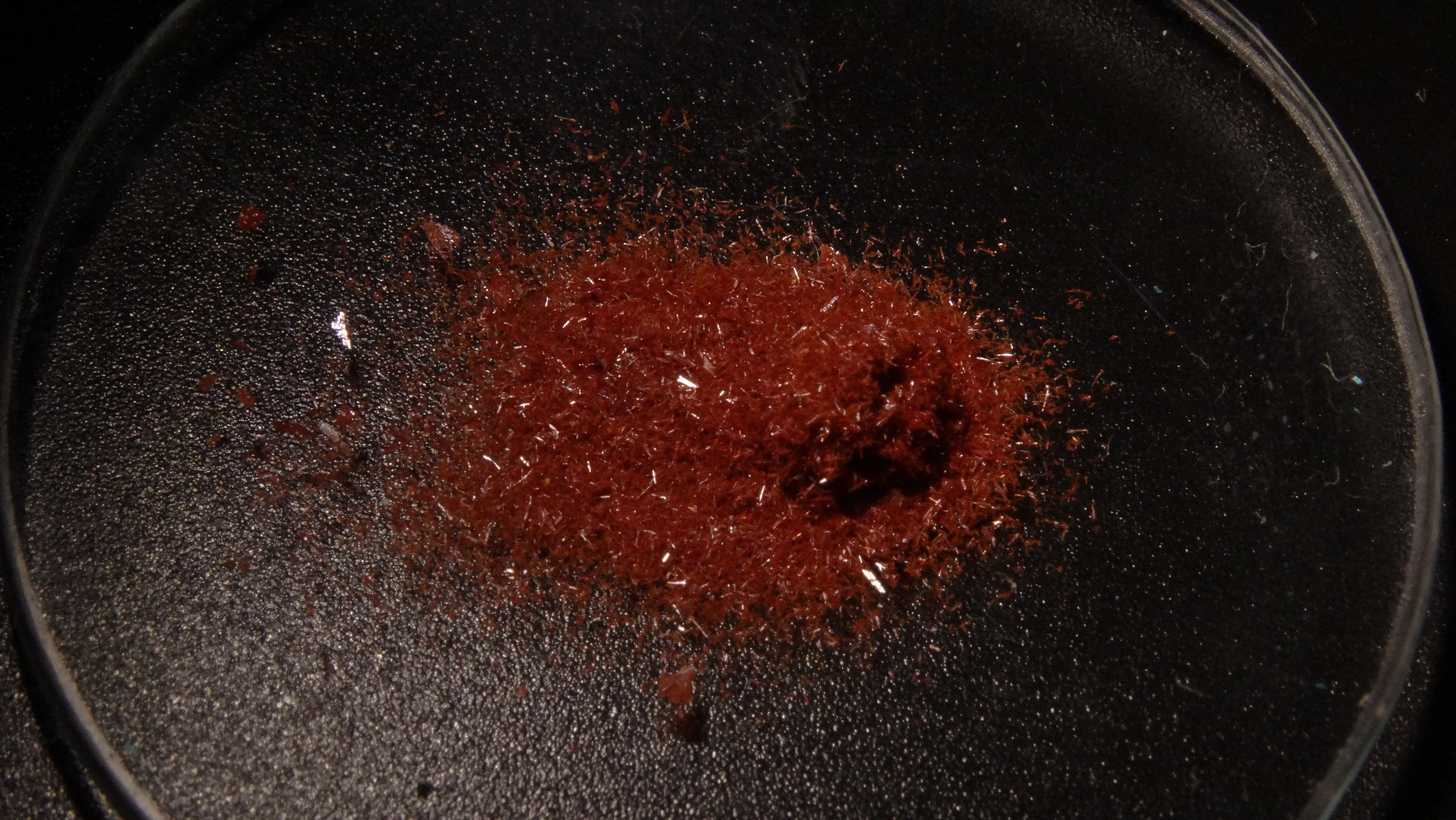
Cesium Tetrachlorocuprate is a charge-transfer semiconductor and mixed Cesium Tetrahalocuprates are tunable band gap semiconductors17, with a band gap easily adjusted by varying the concentrations of halide ions in solution.
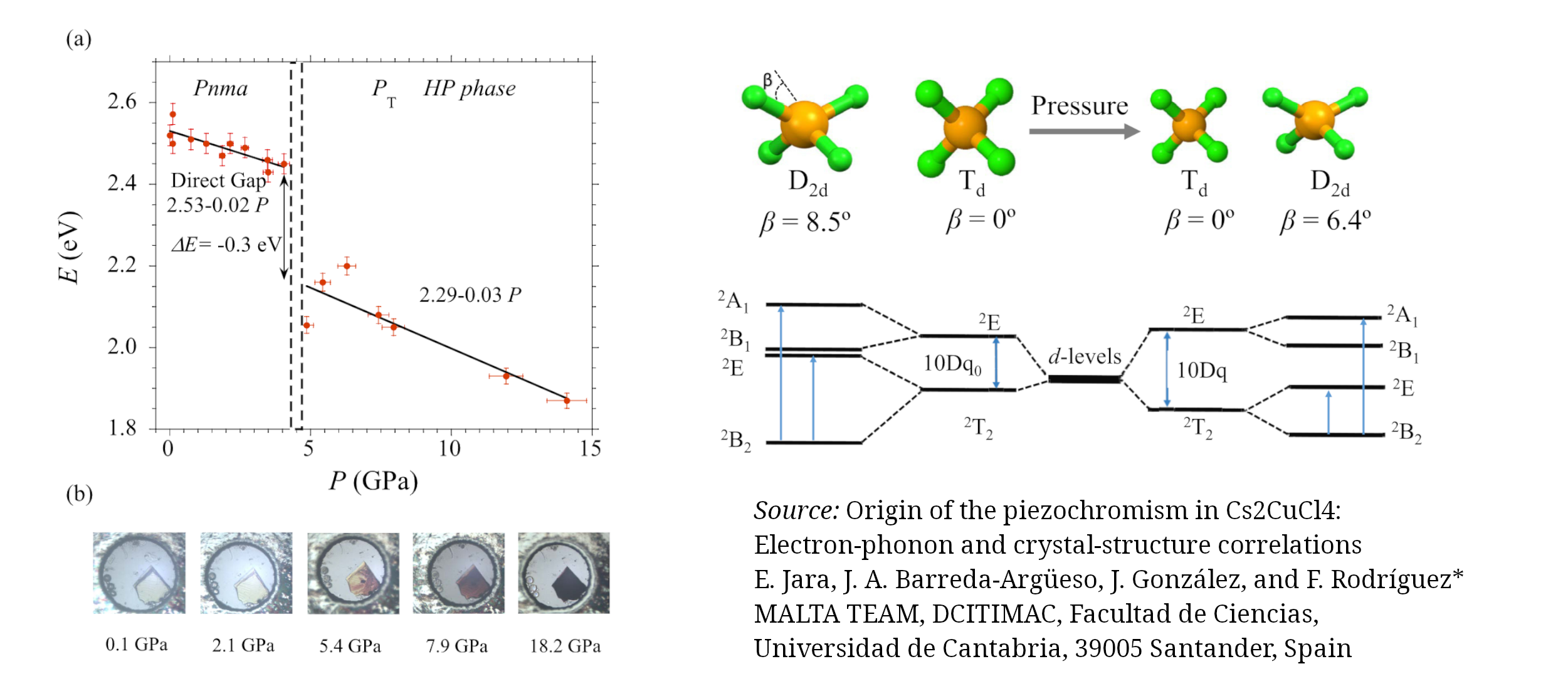
An interesting property of Cs2CuCl4 is that it’s Piezochromic. Because of the particularities of the Cu2+ ion, the structure is much more “pliable” than its more rigid transition metal counterparts, usually this can be induced by changing its coordination chemistry, here the pliability metaphor is more or less direct - inducing more pressure in a diamond anvil cell causes the structure to go from a tetrahedron to a more squeezed tetrahedron, and then to an amorphous phase possibly containing [CuCl6] octahedrons, which manifests as a colour change from a more yellow to red.18
Back to Theory [Shill Element Torture Sequence]
To not tire the sensitive reader with exceptional amounts of tedious theory churn fresh off the boat, forthcoming is a section on just Copper. To not assume too much of the sensitive reader, a basic outline of just enough crystal field theory to have a rough understanding of what is going on is included.
The Crystal Field
Crystal Field Theory is an exceptionally naive theory of bonding for coordination compounds that assumes that every ligand is a point charge around the central atom. CFT does not actually deal with the nature of the M-L bond whatsoever, but it does give us a set of empirical rules that we can use to predict the rough geometries of a decent amount of coordination compounds. Another concept CFT introduces is of high-field and low-field ligands, which when paired with a metal coordination centre make low-spin and high-spin complexes respectively. (see Wikipedia, list of ligands by field strength https://en.wikipedia.org/wiki/Ligand#Examples_of_common_ligands_(by_field_strength))
The introduction of a ligand causes the d orbitals in the valence shell of the metal to split from 5 energetical equals into two distinct energy levels (in case of tetrahedral and octahedral). This gap between energy levels is called The Splitting Parameter (often denoted as Delta o for octahedral or Delta t for tetrahedral). In CFT we just accept that “high field” or “low field” ligands and metals and their respective splitting energies are empirically derived concepts, so we can treat everything like a rule of thumb. Good enough for our application. This gap determines a few factors like the colour or the magnetic properties of your compound and also something called “Crystal Field Stabilization Energy (CFSE)”. Wikipedia also thankfully has a decently good explainer of this if you want to learn more.
Jahn-Teller Distortions
With a heavy heart we must bring up the Jahn-Teller effect. That is the spontaneous breaking of geometric symmetry in compounds with electronically degenerate states.
Now the quantum mechanics behind the JTE is out of the scope of this and nobody outside of insane computational chemists or very niche inorganic specialists bothers. But to give it a rough CFT Treatment (CFTT) just for d9 “Octahedral” copper, after the first splitting of the d orbitals happens, the 2 eg orbitals are still degenerate (2 equivalent ways to place the 3 electrons on them), so the eg orbital splits even further in a way which May Vary (but elongation is the usual for copper).
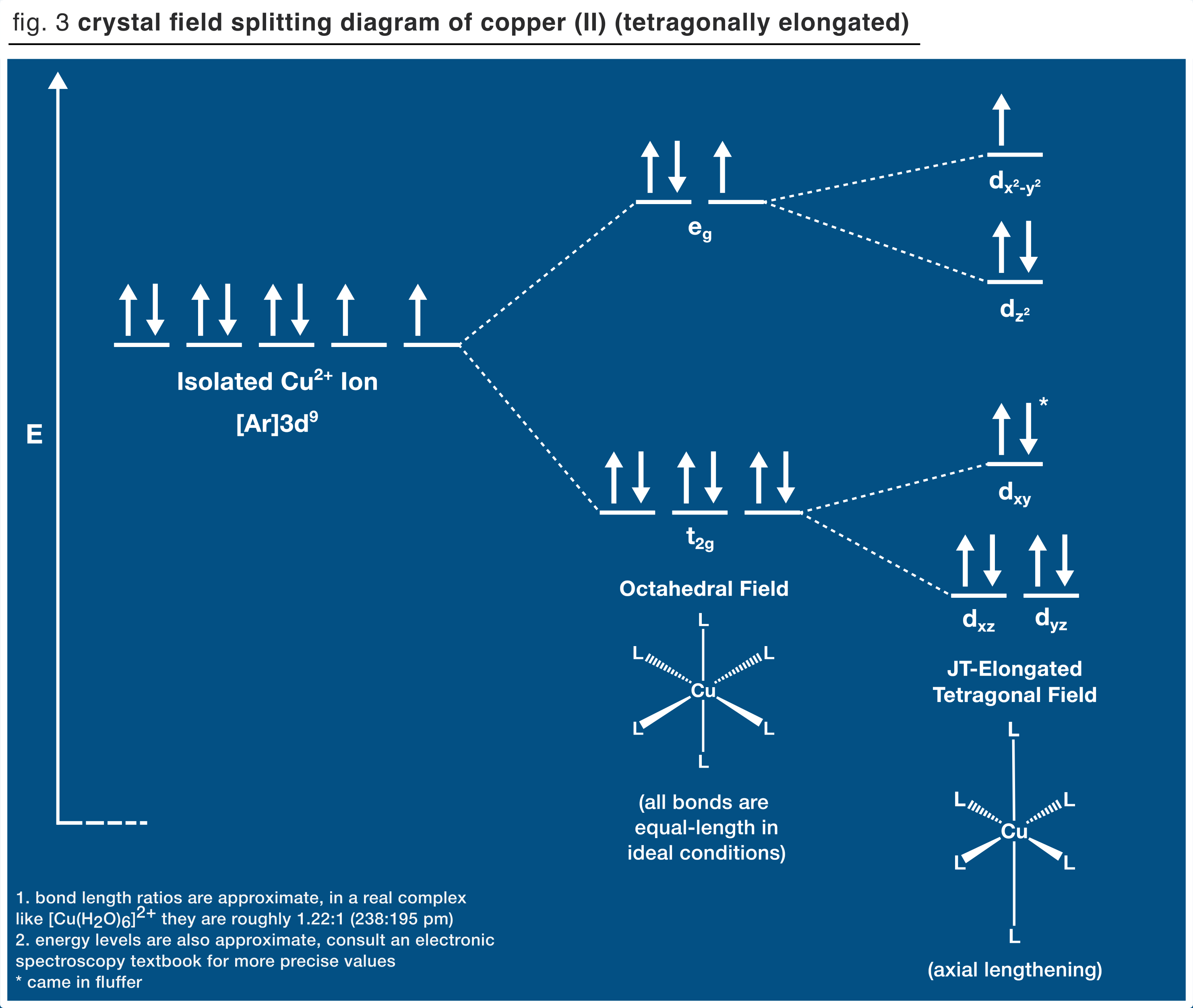
The CFT situation for Tetrahedral Copper is quite different and gives us a squished tetrahedron that acts more or less like a normal tetrahedron instead of the weird planar-flavoured octahedron you get here. This is underexplored in undergrad-level literature (a good treatment of it is in19) and we do not feel competent enough to be the first to tackle that in a crackhead blogpost and for our feeble attempts to do so to proliferate on the internet unchecked.
The following part is not peer reviewed and is mostly educated undergrad guesswork from prior literature. Take it with a grain of salt. Heavily based on this20 chemistry stackexchange answer.
In hydrated tetrachlorocuprates (like the crystal grower darlings K2[CuCl4(H2O)2] and (NH4)2[CuCl4(H2O)2]) copper takes the configuration of a distorted octahedron with two chlorides and two aquo ligands present in a “planar” configuration, and two extra chlorides that are subjects of our JT elongation present at a very long distance. Those chlorides are also weakly bound to the potassium ions in the neighbouring cell, somewhat stabilizing our lattice.
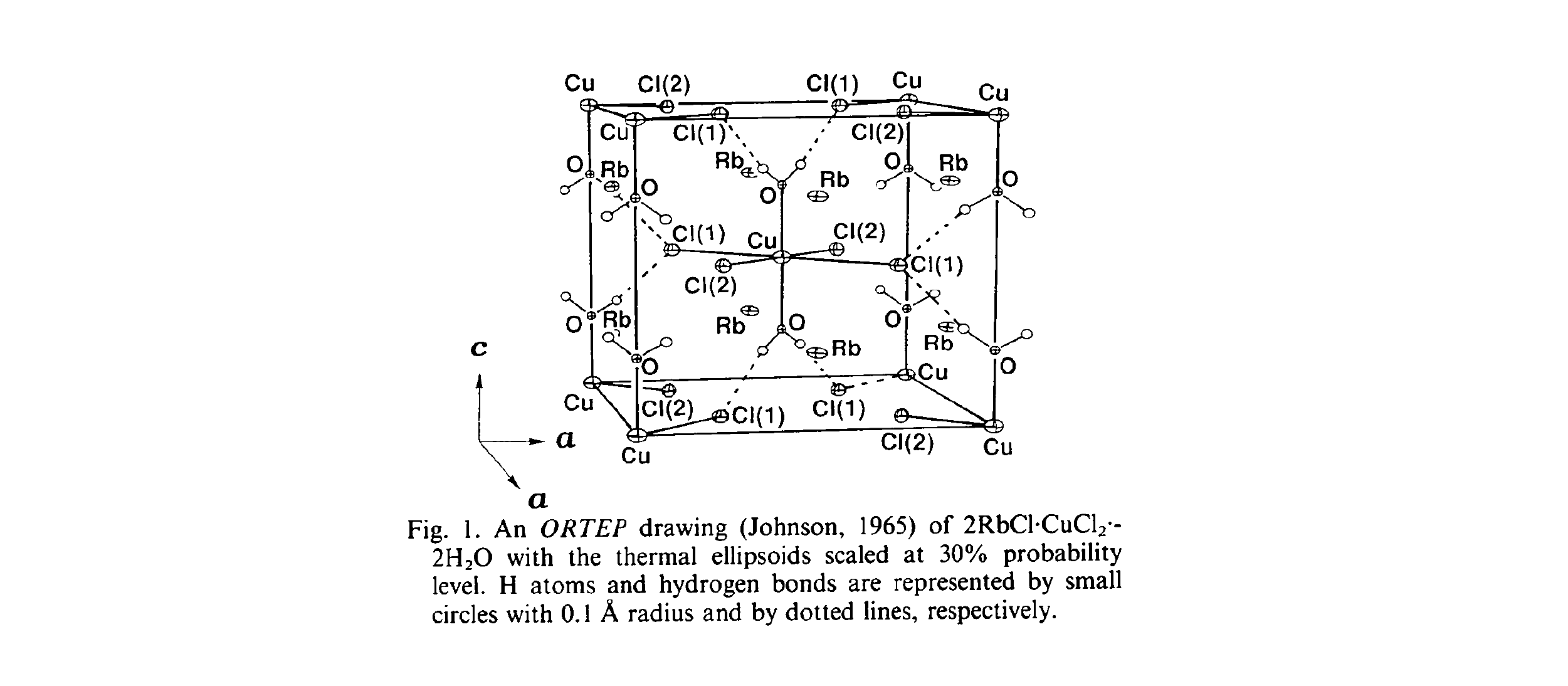
A bigger ion like Cs+ is less likely to force extra water molecules in or to squeeze the copper into a planar structure so it allows for a distorted tetrahedron to form instead of the weird planar-octahedral whatever so we see a structure almost isomorphic to compounds like Cs2[CoCl4]. With the exception of the JT distortion present alongside electrostatic effects from the other atoms in the lattice to squish the tetrahedron.
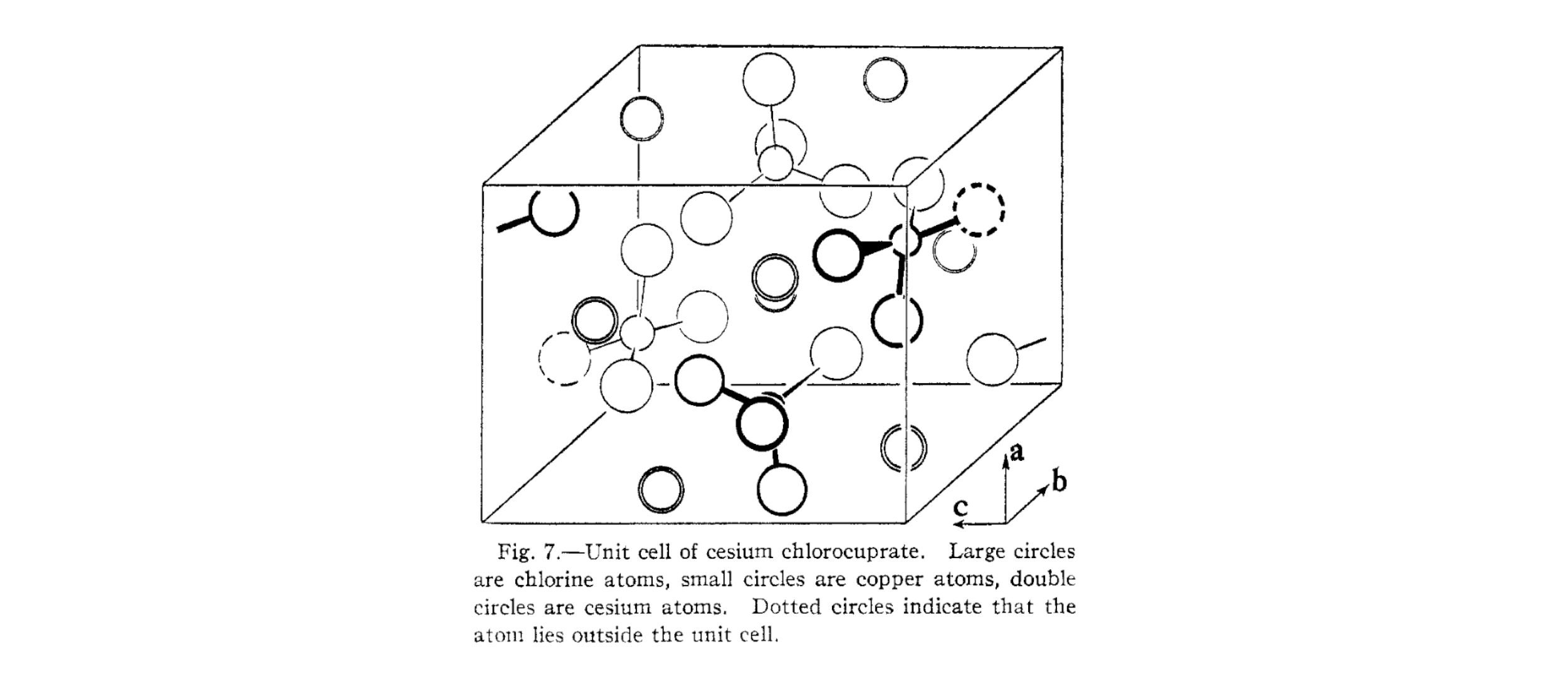
Notably, something like Nickel(II) due to its electronic structure does not have this structural freedom and will simply not form the weird planar-octahedral structures required to fit into a similar structure, reverting to a stable CsNiCl3 with a stable [NiCl6] octahedron. Nickel does not like being a tetrahedron nor does it have the JT “flexibility” of copper to form the distorted octahedron so unless it is stabilized by a big ion such as tetraethylammonium it will simply revert to either a more stable hydrate or chloride octahedron.
The relationships between this, bond lengths, lability (the kinetics of how fast/easily a ligand can enter/leave the coordination sphere), crystal and molecular structure and the chemical properties of the resulting compound will comprise a good half of a semester of undergraduate Coordination Chemistry. A proper LFT treatment of this is either befitting a very rigorous bachelor’s or an entry level master’s course.
Conclusions
We hope you enjoyed this lengthy and wordy monthly installment… Some of the parts in this are surface level due to us underestimating the scope of work and not really having a clear direction in mind when we started. The next few articles will be more concise and to the point and might link back to this in some ways… The schedule might get slightly denser with small bits of less involved Chemistry or other science added in… Only time will tell.
Footnotes
-
https://aryl.org/2024/11/20/hydrazinium_trichlorocuprate.html ↩
-
https://aryl.org/2023/12/31/Piperazine-Tetrachlorocuprate.html ↩
-
they really love calling those materials “perovskite-like” https://scholar.google.com/scholar?hl=en&as_sdt=0%2C5&q=perovskite+like&btnG= ↩
-
https://en.wikipedia.org/wiki/Goldschmidt_tolerance_factor ↩
-
Zhang, X.; Huang, R.; Zhang, Z.; Lu, H.; Sha, H.; Xu, X.; Zheng, Y.; Huang, X.; Wang, S.; Wu, S. Zero-Dimensional Perovskite-like Cs2CoCl4 Crystal for Highly Sensitive X-Ray Direct Detection and Imaging. Chemical Engineering Journal 2025, 504, 158729. https://doi.org/10.1016/j.cej.2024.158729 ↩
-
Laurell, P.; Scheie, A.; Mukherjee, C. J.; Koza, M. M.; Enderle, M.; Tylczynski, Z.; Okamoto, S.; Coldea, R.; Tennant, D. A.; Alvarez, G. Quantifying and Controlling Entanglement in the Quantum Magnet Cs$_2$CoCl$_4$. arXiv 2020. https://doi.org/10.48550/ARXIV.2010.11164 ↩
-
Naida S. Gill, R. S. Nyholm; 802. Complex halides of the transition metals. Part I. Tetrahedral nickel complexes. J. Chem. Soc. 1959; 162 3997–4007. https://doi.org/10.1039/JR9590003997 ↩
-
Saroj, S. K.; Meenakshi; Gupta, R. Fe2+ Doping in Antiferromagnetic CsNiCl3 Triggers a Spin Glass Effect, Enhances Its Optical and Electrochemical Properties. Eur J Inorg Chem 2025, 28 (25). https://doi.org/10.1002/ejic.202500324 ↩
-
Wang, C.; Li, Y.; Shen, H.; Ren, J.; Sun, Q.; Yan, H.; Li, X.; Zhou, H.; Zhang, X.; Rosei, F.; Zhang, J. Eu 3+ -Induced Passivation and Charge-Transport Modulation in Cs 2 FeCl 5 ·H 2 O Single Crystals and Evaporated Thin Films for Photodetectors. Phys. Chem. Chem. Phys. 2026, 28 (7), 4731–4743. https://doi.org/10.1039/d5cp04307g ↩
-
Wang, C.; Cao, W.; Shen, H.; Gao, H.; Zhou, H.; Guo, X. Crystal Structure, Band Gap, and Optoelectronic Performance of Lead‐Free Cs2FeCl5⋅H2O Erythrosiderite‐Halide Single Crystal and Its Thin Film. Eur J Inorg Chem 2025, 28 (5). https://doi.org/10.1002/ejic.202400628 ↩
-
Hou, J.; Wu, J.; Qin, Z.; Fang, Y.; Shen, L.; Qiao, X.; Dong, L.; Zhang, G.; Liu, Y.; Zhao, G.; Chen, H. Lead-Free Halide Cs2MnCl4:Cu+ as a New Phosphor for Efficient Green Light Emission. J. Mater. Chem. C 2023, 11 (6), 2137–2143. https://doi.org/10.1039/d2tc04607e ↩
-
Wu, J.; Hou, J.; Dong, L.; Liu, Y.; Zhao, G.; Qin, Z.; Ding, W.; Chen, H.; Fang, Y. Trace Doping Enhanced Near‐Infrared Emission in Cs2MnCl4 for Anti‐Interference Optical Communication. Laser & Photonics Reviews 2026. https://doi.org/10.1002/lpor.71371 ↩
-
Hou, J.; Wu, J.; Fang, Y.; Wei, Y.; Dong, L.; Zhang, G.; Liu, Y.; Chen, H.; Li, G. Cs2MnCl4:Eu2+: A Near-Violet Light-Triggered Single-Component White Light Emitter. ACS Appl. Mater. Interfaces 2024, 16 (23), 30176–30184. https://doi.org/10.1021/acsami.4c03066 ↩
-
Arramel; Xie, A.; Yin, X.; Tang, C. S.; Fauzi, A. D.; Chi, X.; Diao, C.; Sahdan, M. F.; Birowosuto, M. D.; Dang, C.; Rusydi, A.; Wee, A. T. S. Electronic Modulation in Site-Selective Occupation of Quasi-2D Triangular-Lattice Cs2CuCl4–xBrx Perovskite Probed by Surface-Sensitive Characterization. ACS Appl. Mater. Interfaces 2019, 12 (3), 4114–4122. https://doi.org/10.1021/acsami.9b19517 ↩
-
Jara, E.; Barreda-Argüeso, J. A.; González, J.; Rodríguez, F.; Valiente, R. Origin of the Piezochromism in Cs2CuCl4: Electron-Phonon and Crystal-Structure Correlations. Phys. Rev. B 2019, 99 (13). https://doi.org/10.1103/physrevb.99.134106 ↩
-
Halcrow, M. A. Jahn–Teller Distortions in Transition Metal Compounds, and Their Importance in Functional Molecular and Inorganic Materials. Chem. Soc. Rev. 2013, 42 (4), 1784–1795. https://doi.org/10.1039/c2cs35253b ↩
-
https://chemistry.stackexchange.com/questions/58271/why-is-nh42cucl4-square-planar-complex-but-cs2cucl4-is-tetrahedral ↩