Contents
tw: us politics, close up pictures of human brain
Photochromism is the process of a chemical undergoing a reversible colour change upon interaction with light. “Reversible” here being a load-bearing descriptor differentiating it from photodegradation, which is what you can commonly see in non-lightfast pigments after they sit out in the sun after a while. Photochromicity has a myriad of different mechanisms ranging from cis-trans isomerizations (azobenzenes), ring opening and closure reactions (spiropyrans, the oldest known photochromic compounds)1 to redox reactions (this work, a lot of inorganic photochromic pigments).
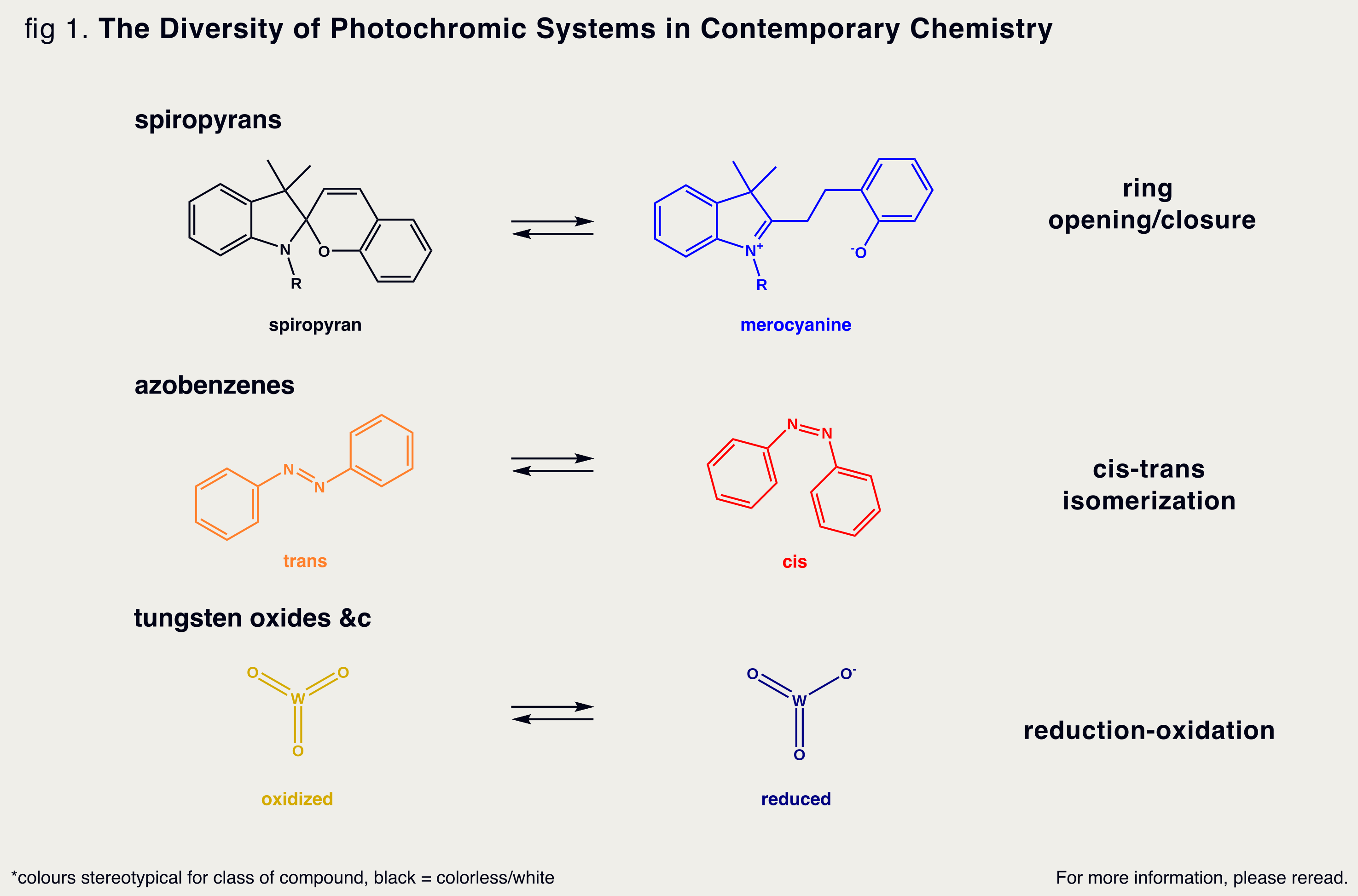
To see redox photochromism in action on your own, contact your local Ray-Ban® representative and ask them to provide you with their finest pair of photochromic Aviator Clear Evolve™ Photochromic Outdoor Spectacles and place them out in the sun on a warm day. Be wary of counterfeits. To show off a simpler, easier to replicate photochromic system, we will be looking at a photochromic system based on Methylene Blue instead.
Methylene Blue is an organic dye commonly used in biology as a tissue stain, in medicine to treat methemoglobinemia (lack of methylene blue in blood) and to stop your fishies from growing moldy in their tanks. In the chemistry laboratory it finds use as a photosensitizer and as a redox indicator for demonstrations aimed at various infantiles and analytical chemists. Today we will be using it to play with photochromism, demonstrate diffusion processes in chemical reactions, and we’ll also try to manufacture a sketchy cheap photochromic coating. All without paying for a vacation to Spiropyran Country or for a pair of expensive shades.
Foreword: on Worms in US Politics
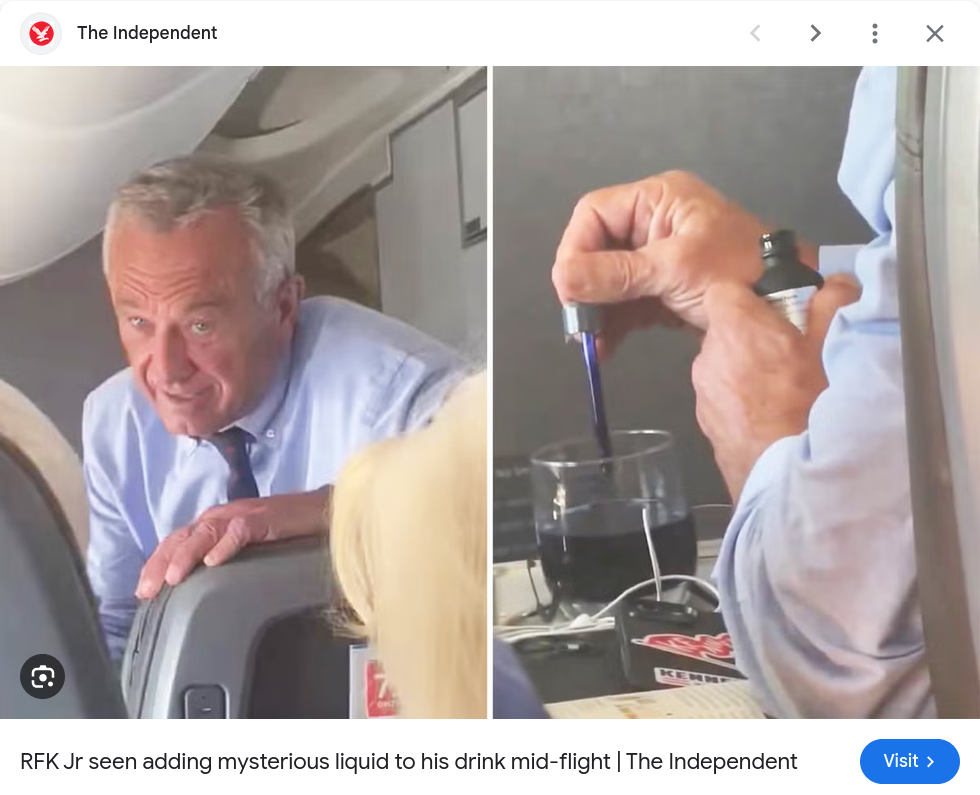
An astute reader could note, that the medicinal properties of the dye do not actually end at its use as a methemoglobinemia drug, and actually go a tad bit further, which is precisely why it went through an utter PR nightmare somewhere around 2025 during the USAmerican Presidental Transition. It really brought us no joy whatsoever to see a topic of niche nootropics discourse break its way into the mainstream of American Electoral Politics after noted US elected necrozoophiliac2 Richard FK Jr. was caught spiking his own drink with a mysterious Blue Fluid that is allegedly a solution of MB.3
The worst has come to fruition, taking methylene blue orally has become a short lived signal of one’s Chuddery.
As an even more astute reader will know, methylene blue does not cure cancer or COVID-19 or any other hip, faux-cure attracting disease. It can disinfect things, but it is not a suitable replacement for Chemo or Antivirals.
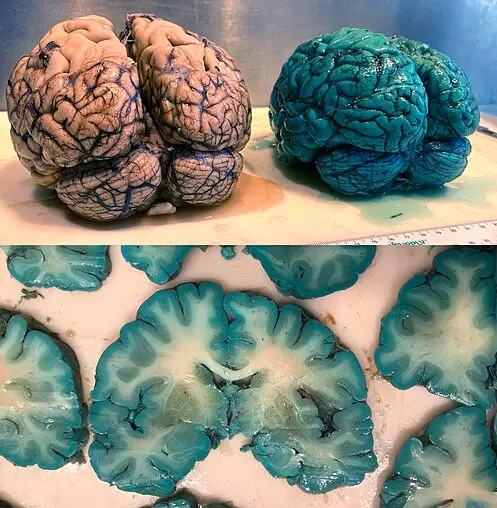
However, what it does in fact do, is dye your piss and internal organs both a pleasant blue (or green)4 colour, and also act as an antidepressant of the MAOI variety (like, for example, Moclobemide)5, which brings with itself a brand a new set of issues and risks.

TL;DR: you probably should not take methylene blue if you are already on antidepressants (ESPECIALLY SSRIs), are a habitual serotonergic stim user (coke, MDMA) or if you’re a Cheese Connoseiur snacking on cartoonish large wheels of Parmeggiano Reggiano. Even though the reports of Serotonin Syndrome caused by methylene blue overdose mostly involve patients going through IV therapy6, we’d still err on the side of caution if you do get an urge to take it as a DIY depression treatment or as part of a grotesque party trick that involves spraying blue urine all over your unsuspecting friends and/or their property. This is not medical and/or omorashi advice.
The Demo
The demo here originates (?) from “Chemical Demonstrations, Volume 5: A Handbook for Teachers of Chemistry: 05” by Bassam Z. Shakhashiri, which does not exist in a digitized copy anywhere on the internet so instead we have to infer information from a photograph of the page posted on twitter by a mutual7 few years prior.
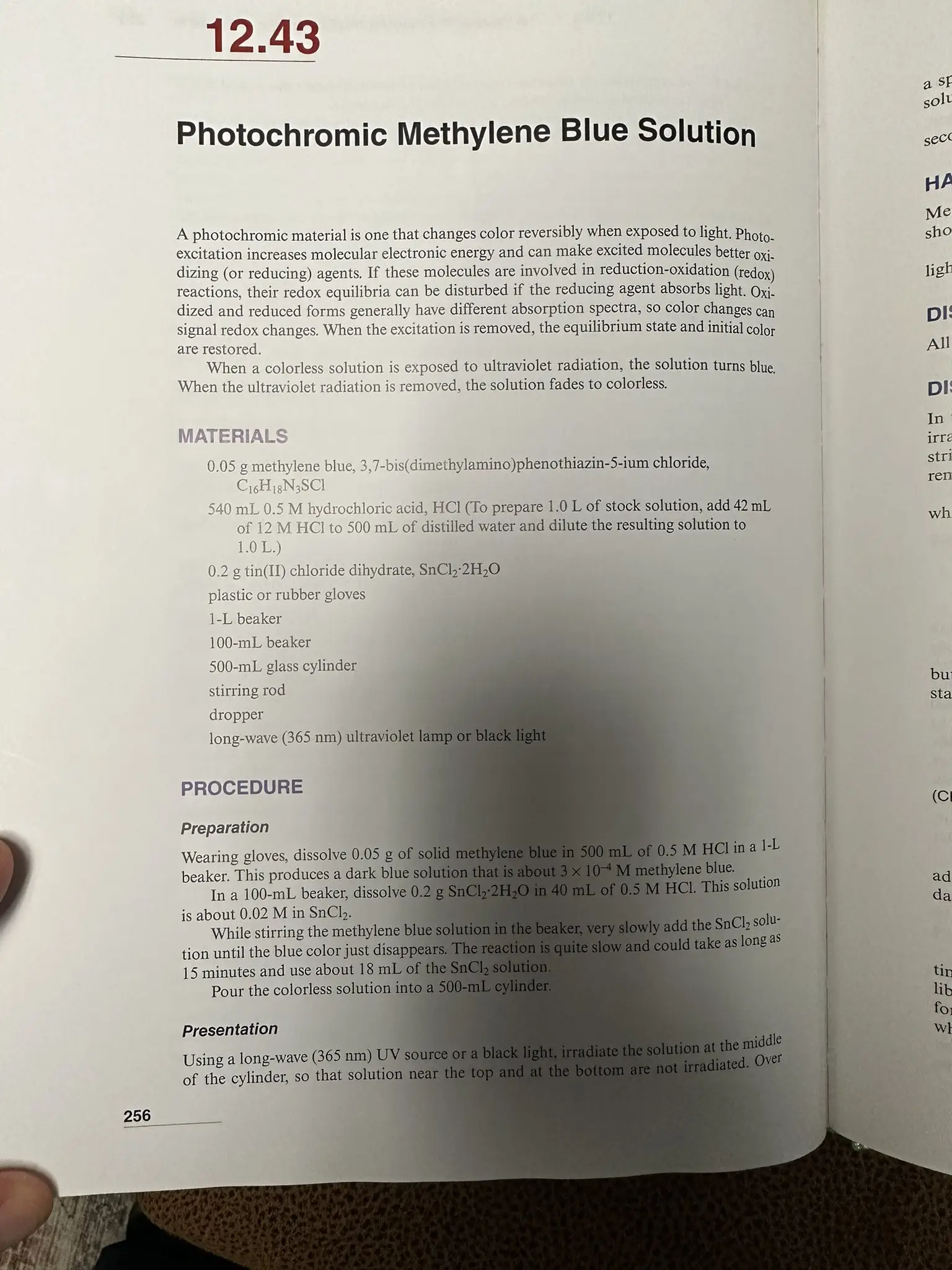
The solutions were prepared in more or less the same manner as described in the book with the only major difference that the solid methylene blue here is replaced by half a milliliter of 1% w/w solution we bought at a local drug store. This is not a precise procedure, and you can (and we did at some point) very much just eyeball all of the reagents here and still end up with a working photoredox system, though your mileage may vary with regard to color, kinetics or the amount of redox cycles the system can withstand before oscillations cease.
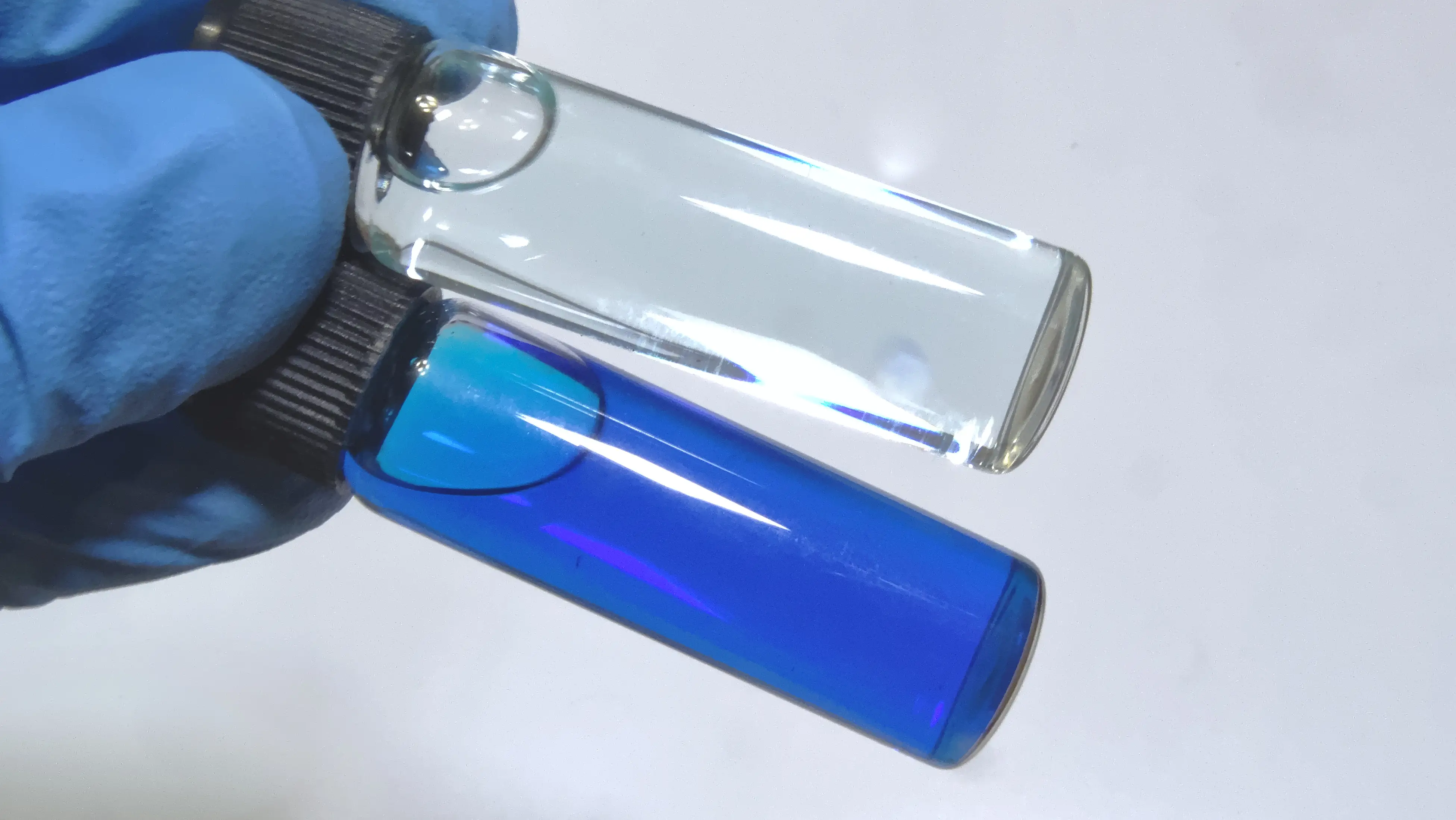
The tin chloride solution is added with stirring and a fair bit of waiting in-between additions (a few drops to a ml at a time) until full-ish discoloration is achieved. Here you can see a comparison of a reduced and a fully oxidized solution of the dye. Full discoloration is difficult to achieve as the system is quite dilute, and therefore runs into diffusion limits quite fast.
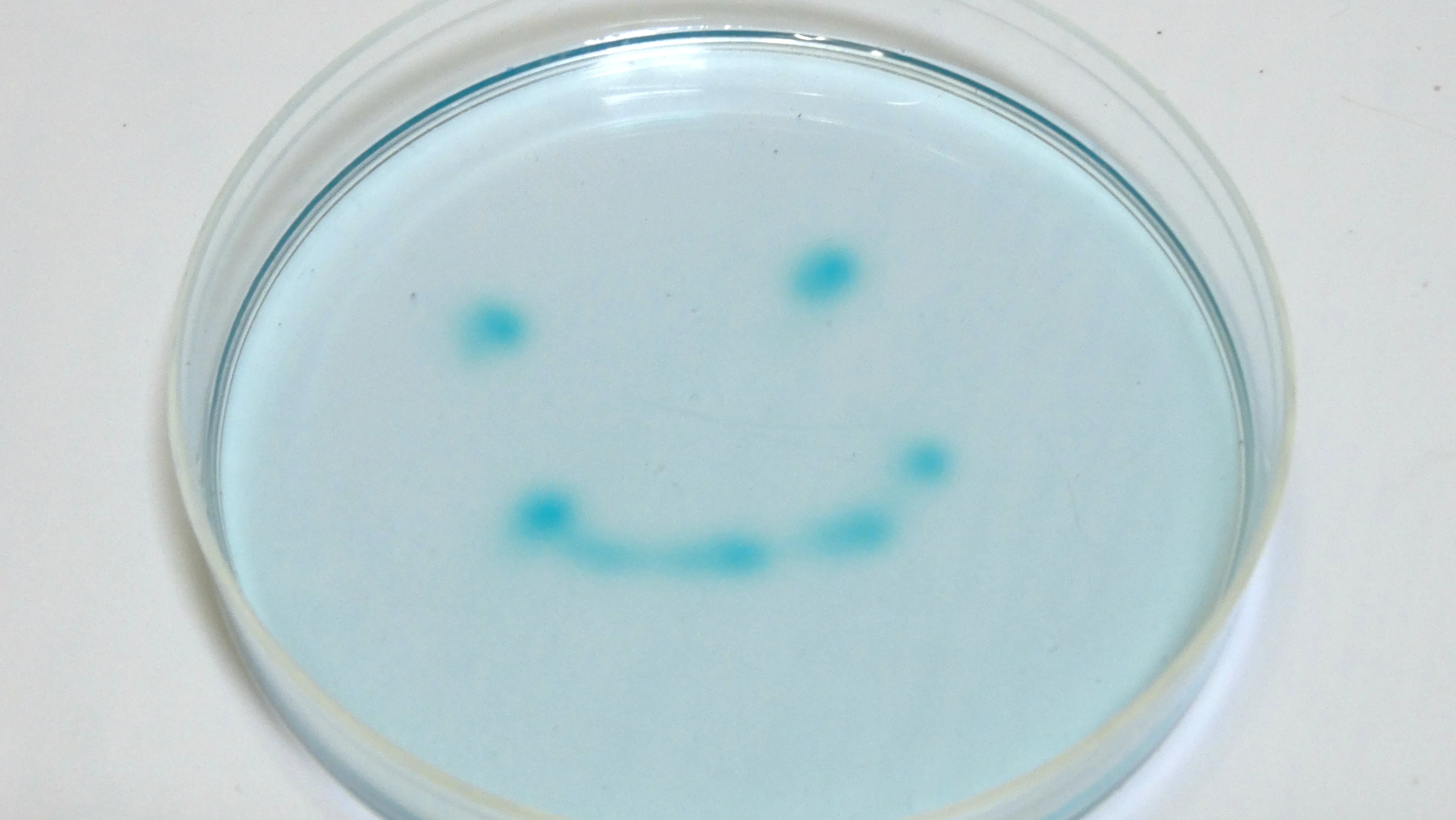
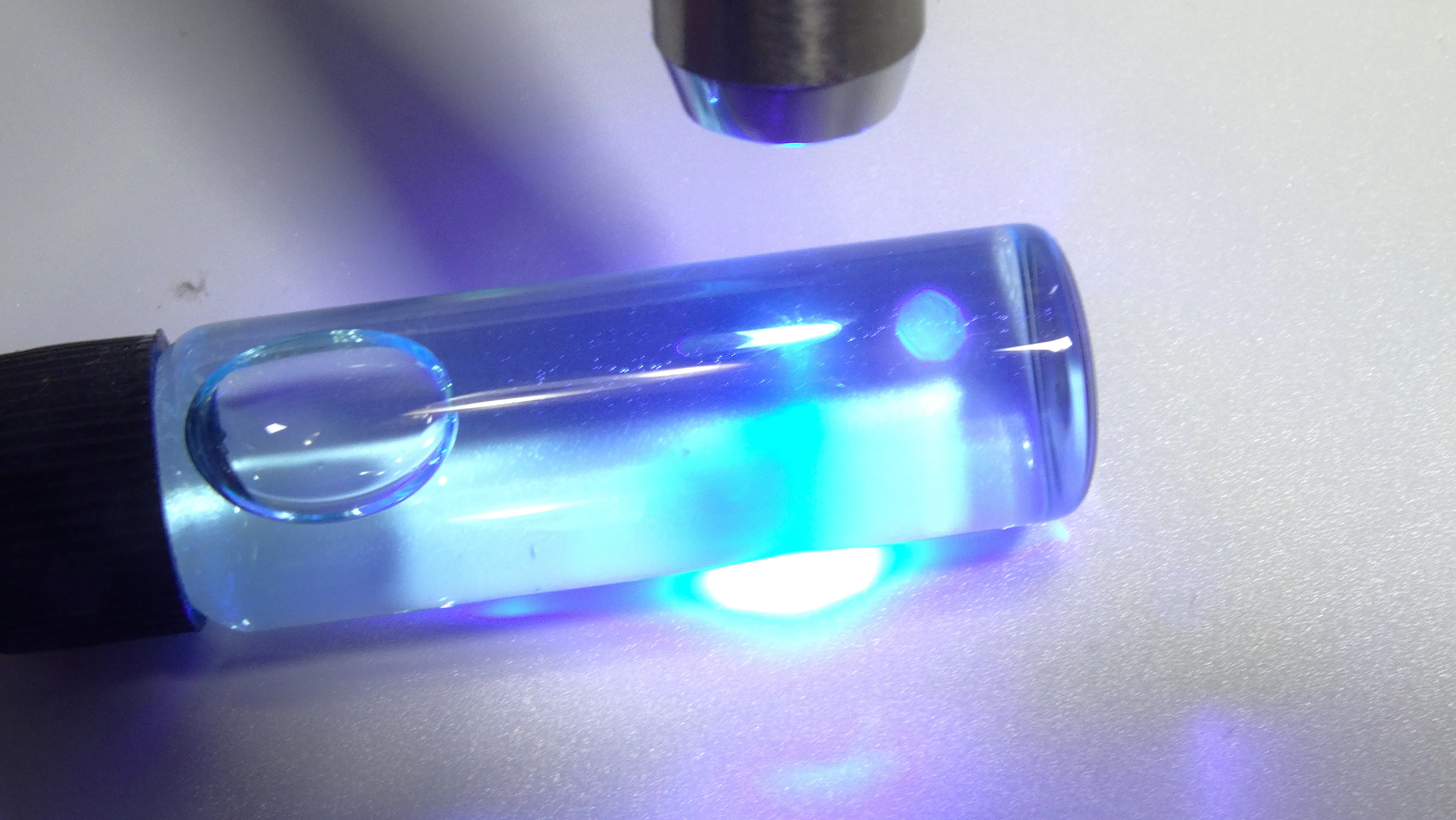
After the solution discolours, subjecting it to UV or Near-UV right causes a rapid change from very light blue or colourless to a deep blue, signalling the return of the methylene blue to its initial form.
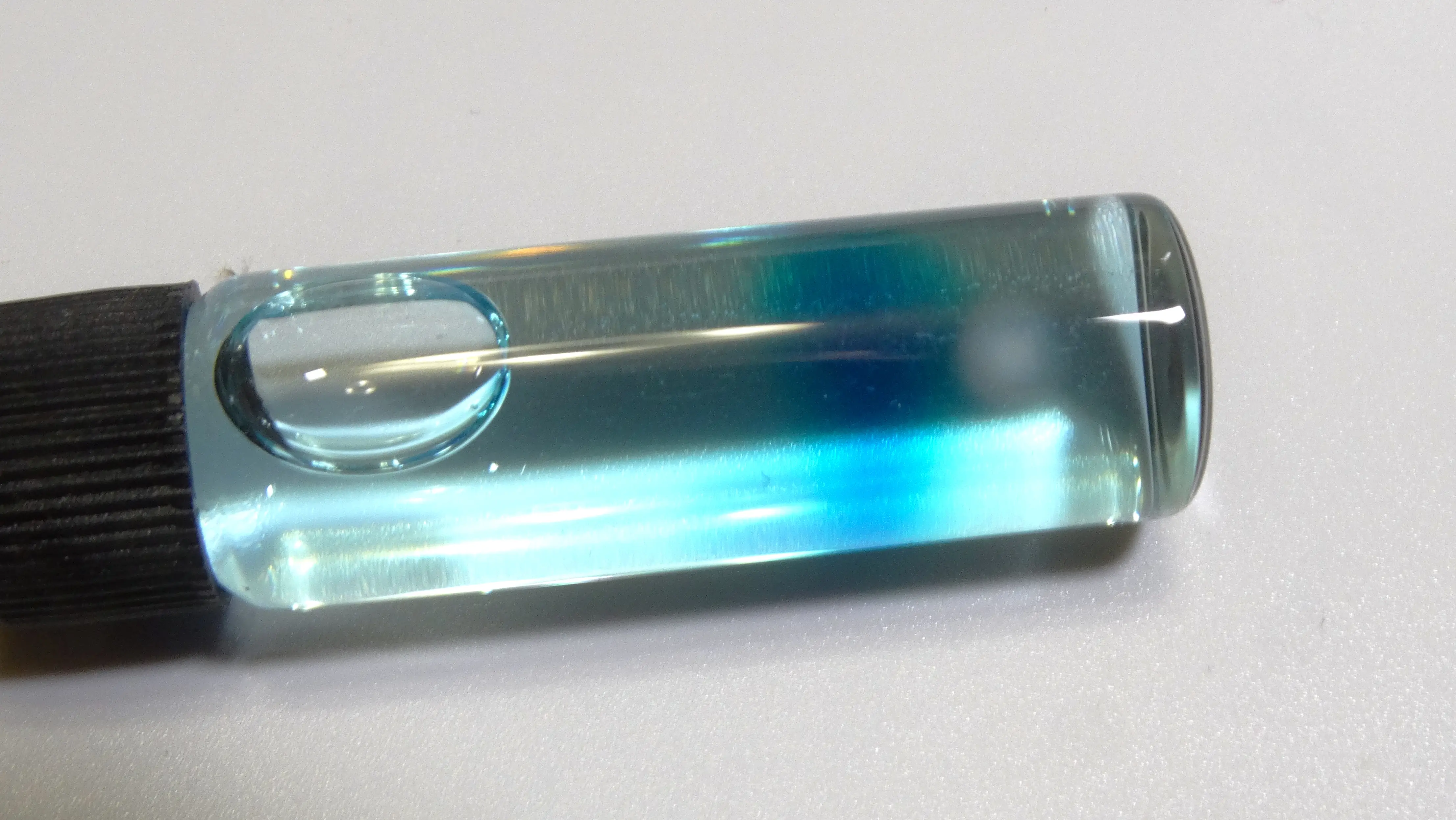
If the reaction vessel is left undisturbed, diffusion happens slow enough that you can observe reaction hotspots right across the beampath. Here you can see the effect of that combined with extra gentle swirling of the vial
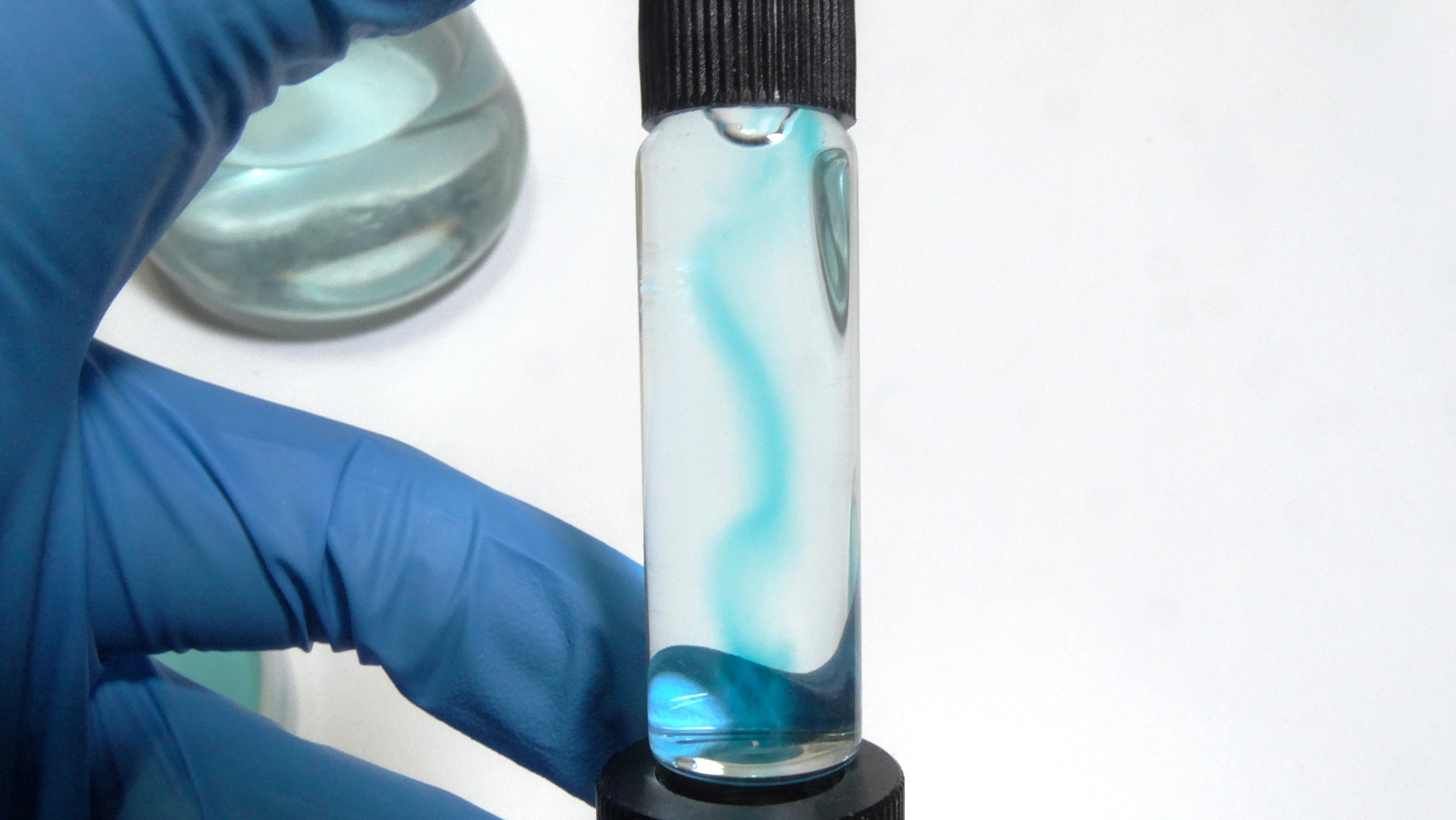
Sadly, after a few days, the SnCl2 in the solution tends to deplete itself and the reaction mix goes towards an irreversible, permanent blue.
A video of the reaction in action. We think it’s a bit too unseemly to include in the main article body but it demonstrates the reaction kinetics pretty well.
How does this work?
The first step in this mechanism is the reduction of Methylene Blue to Colourless Leucomethylene Blue by the Tin (II) Chloride and the oxidation of Tin (II) Chloride by Methylene Blue to Tin (IV) Chloride.
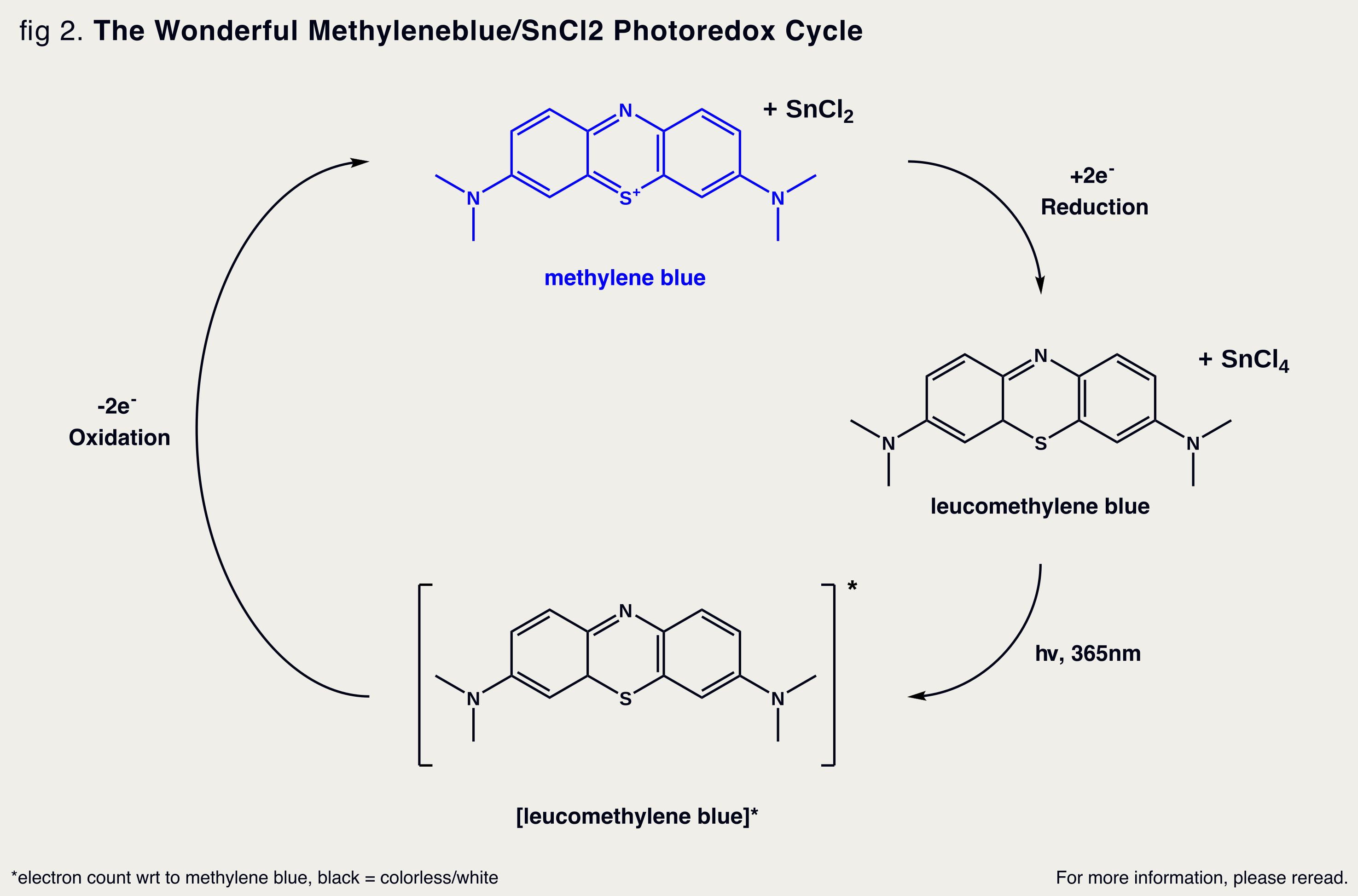
Then, under irradiation with a sufficiently near-UV source, the Leucomethylene Blue transitions into an unstable intermediate state (LMBH*), which collapses back into Methylene Blue whilst also reducing the SnCl4 back into SnCl2. The regenerated methylene blue then reacts with the SnCl2, oxidizing it back to SnCl4, and the cycle proceeds ad nauseam.8
A really good treatment of the theory and reaction kinetics of a quite similar reaction is given in this paper made by Suzuki et al.9. Seeing someone with “Otsuma Ranzan Junior and Senior High School” get authorship on an RSC publication before us felt like a giant punch to the gut. Good for them. Although in their paper, Ascorbic Acid is used instead of Tin (II) Chloride, leading to some key differences in the reactivity of the two systems. Namely, as we have brought up before in the experiment section, after some time (a few hours to a couple of days depending on the concentrations in solution) sitting in loosely, if speaking in air-free terms, sealed vessels, the SnCl2/MB system irreversibly colors blue and requires the addition of more SnCl2 to get it going again, which we assume happens because of the interaction of SnCl2 and/or LMBH with the oxygen present in the atmosphere. This, to our understanding, does not happen in the Ascorbic Acid system, where dissolved oxygen actually plays a mostly beneficial role.
An Attempt at Manufacturing a Photochromic Coating
In our research process we found a Chinese paper8 detailing the preparation of a “cheap and easily accessible” photochromic coating using this exact system with an added thickener, so we decided to try it.
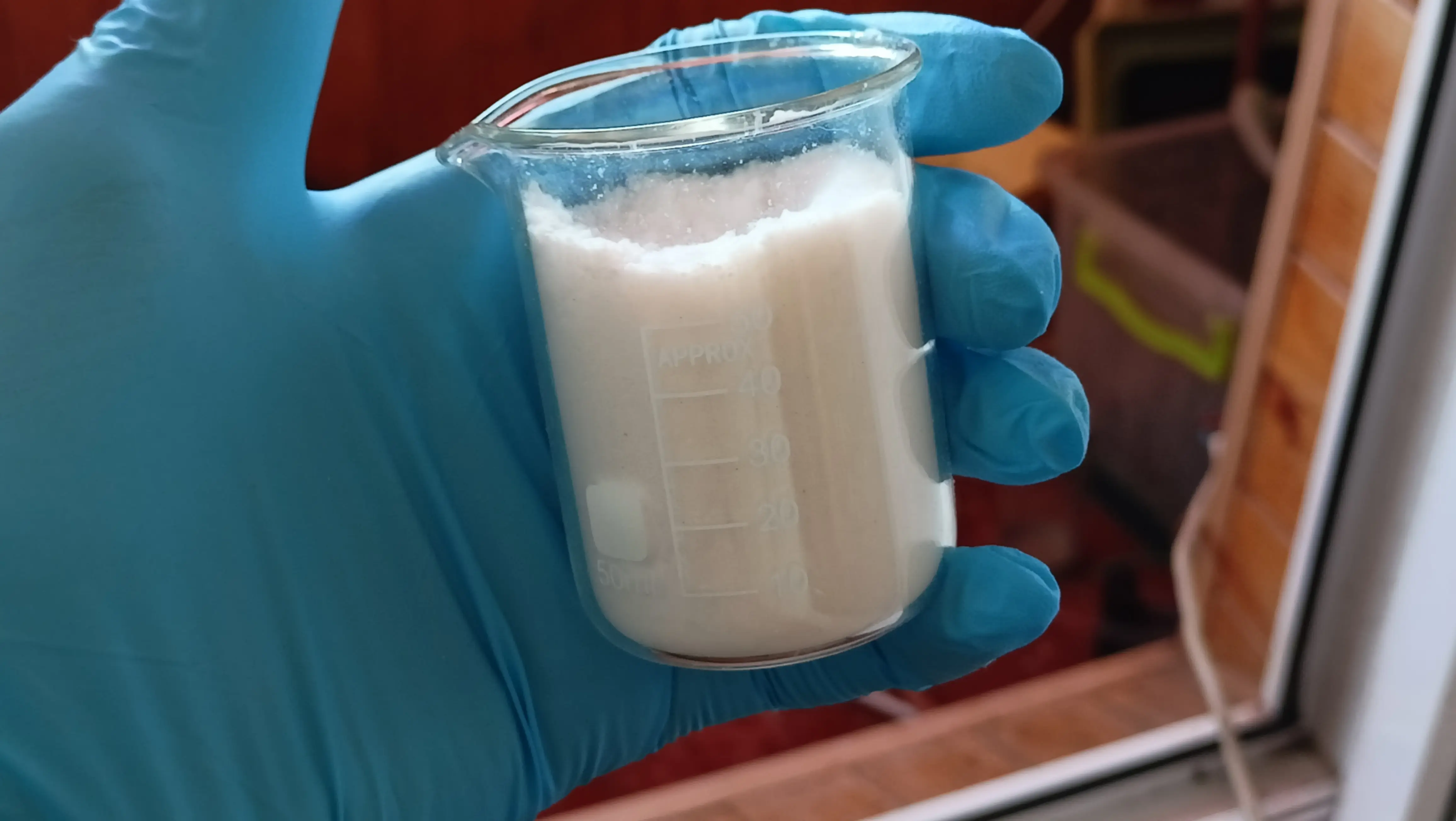
On a fateful early morning in July (after getting a grand total of 30 minutes of shut-eye due to a modafinil miscalculation) 5 grams of Fumed Silica were weighed out into a 50 ml beaker. The fumed silica deserves its own side-tangent as we honestly have never seen a solid this Sparse. The 5 grams we used take up the whole beaker and spooning the solid out took us a solid minute. What a dreadful substance it is. Thankfully we still had a stash of N95s back from Peak COVID in our wardrobe so silicosis was narrowly avoided this time.
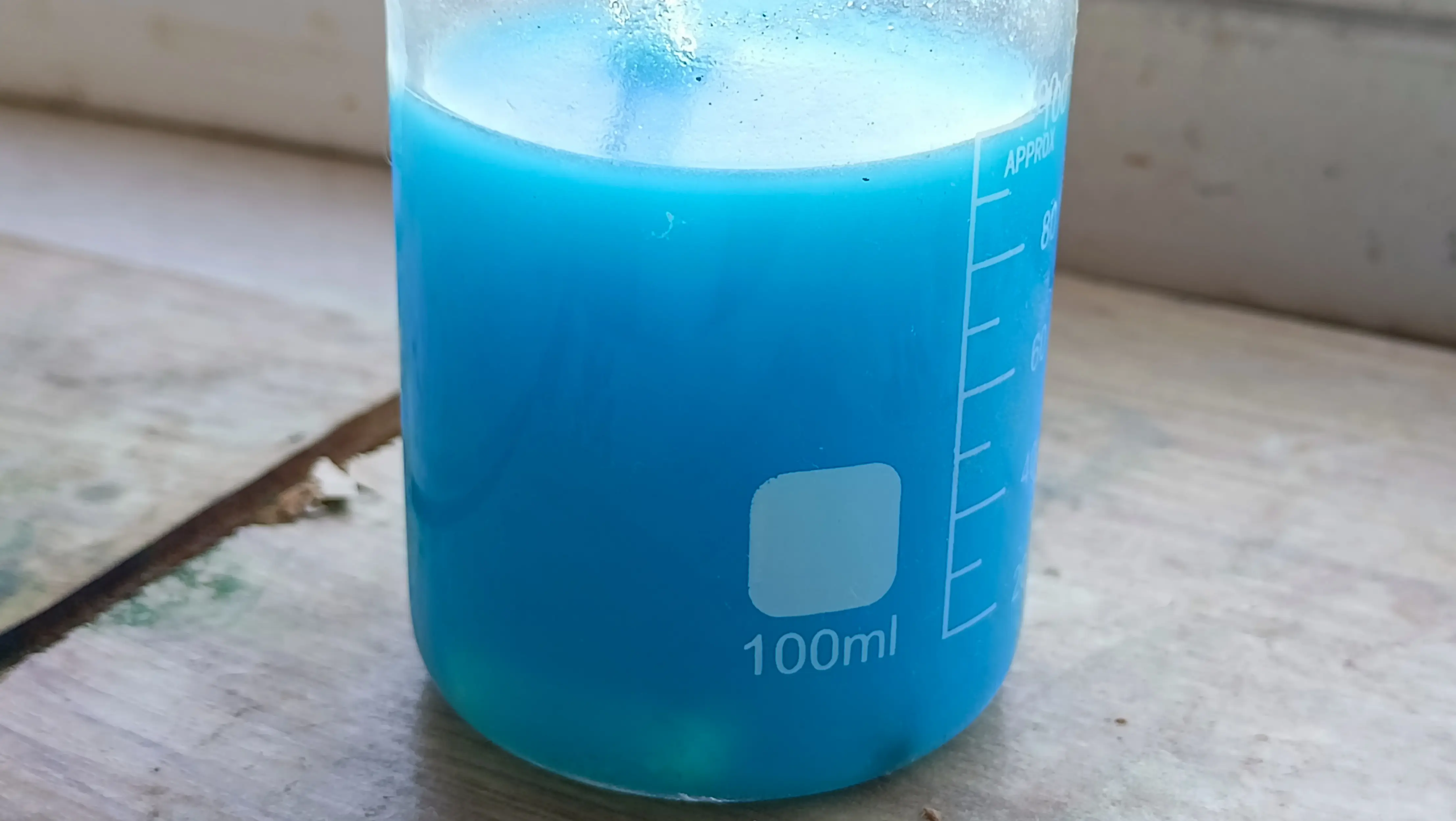
The solid was added in small portions to 250 ml of freshly prepared photochromic solution, taking care that the fumed silica uniformly disperses throughout the whole liquid. The result was a rather blue milky suspension, signalling that Something Went Wrong.
To rectify the blueness, a few mg of SnCl2 were eyeballed out and a few drops of dilute hydrochloric acid were added, which thankfully led to the discoloration of the solution. The resulting coating suspension ended up being this photochromic, seminal-looking fluid that we put inside of this milk-bottle looking container.
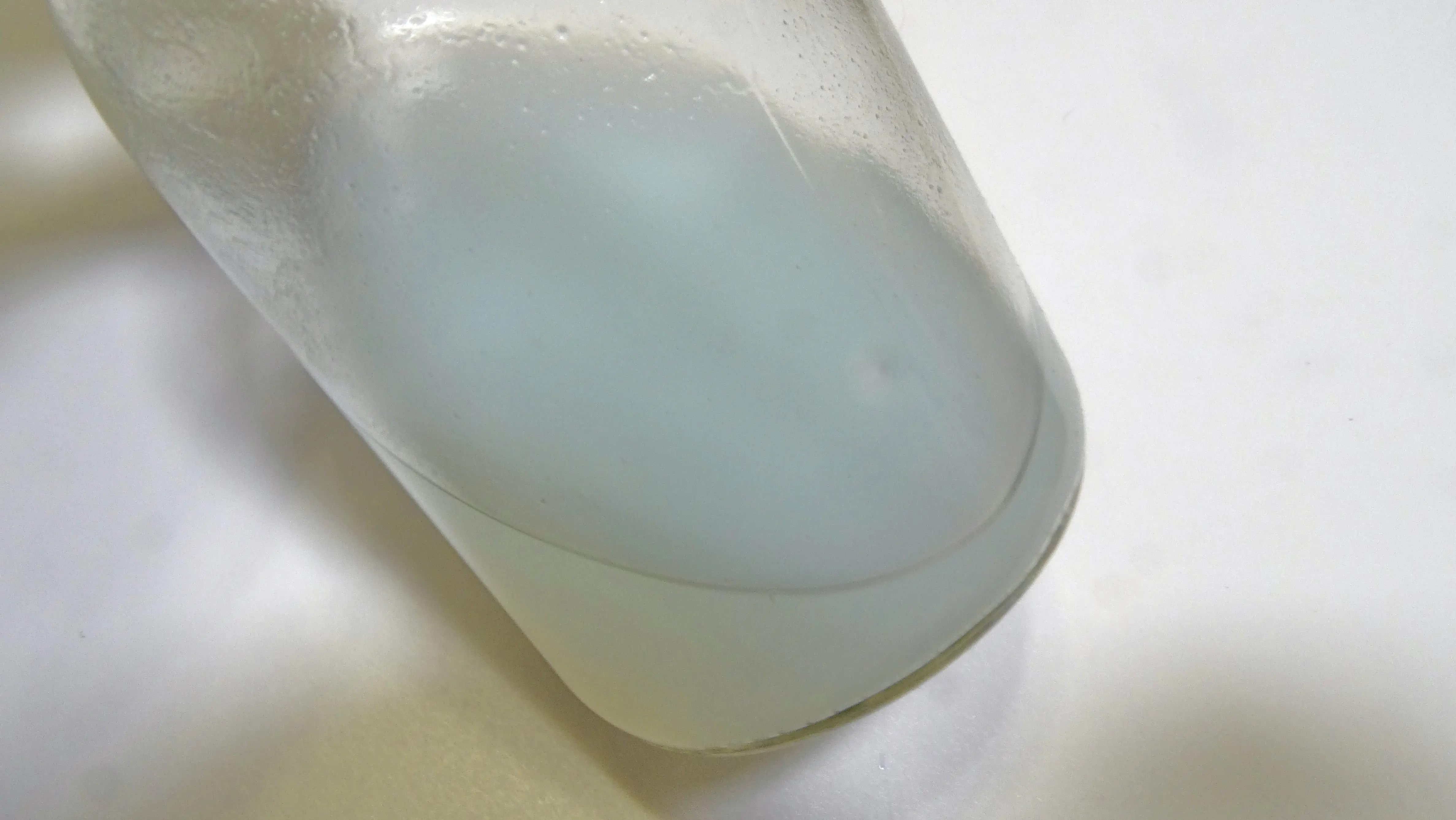
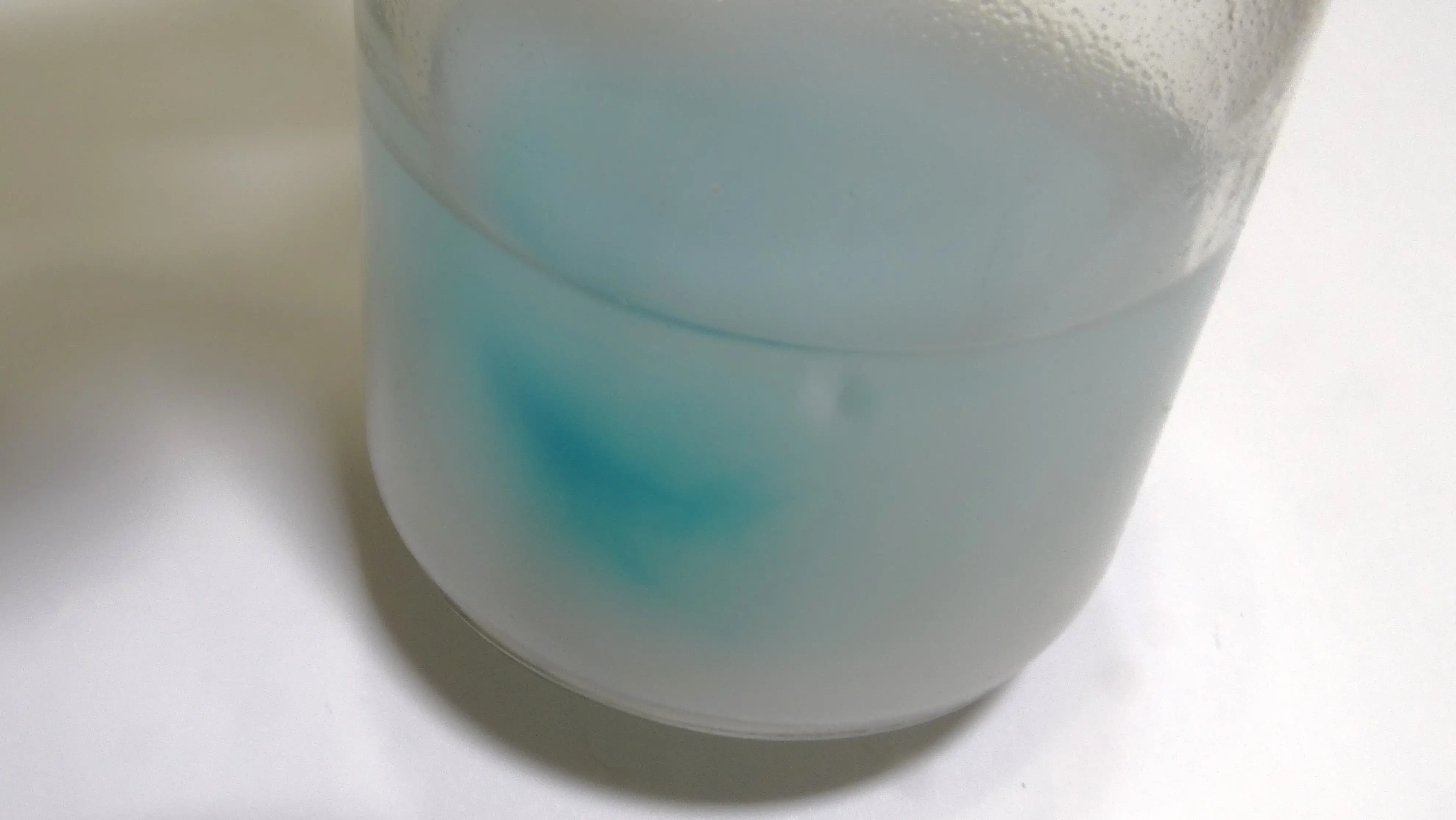
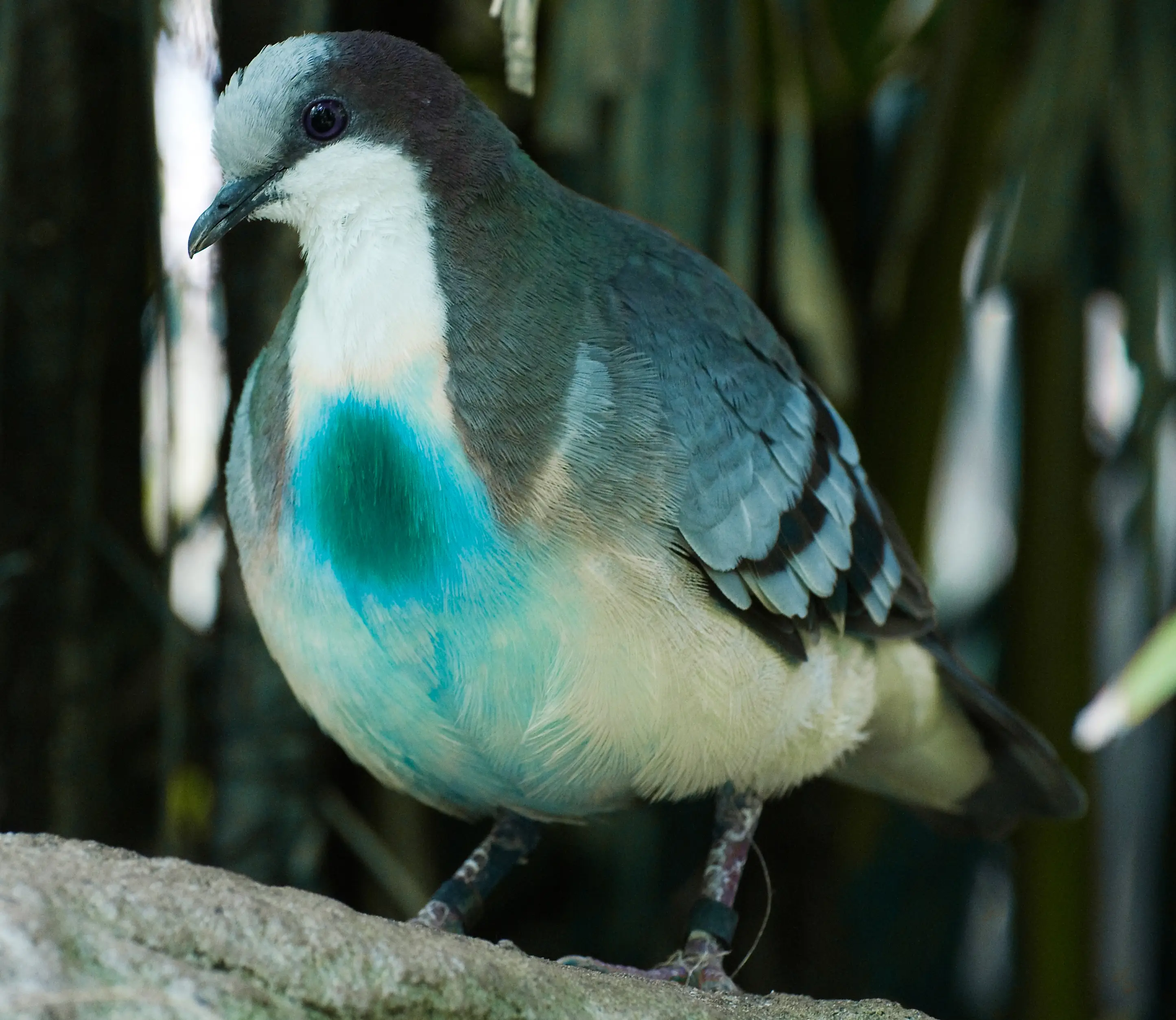
Due to the opacity of the silica and the increased thickness of the solution, irradiation here happens in a curious “spotty” manner (like the spot on the chest of a luzon bleeding-heart dove10, except blue11), and the diffusion of the blue proceeds at a noticeably more sluggish pace.
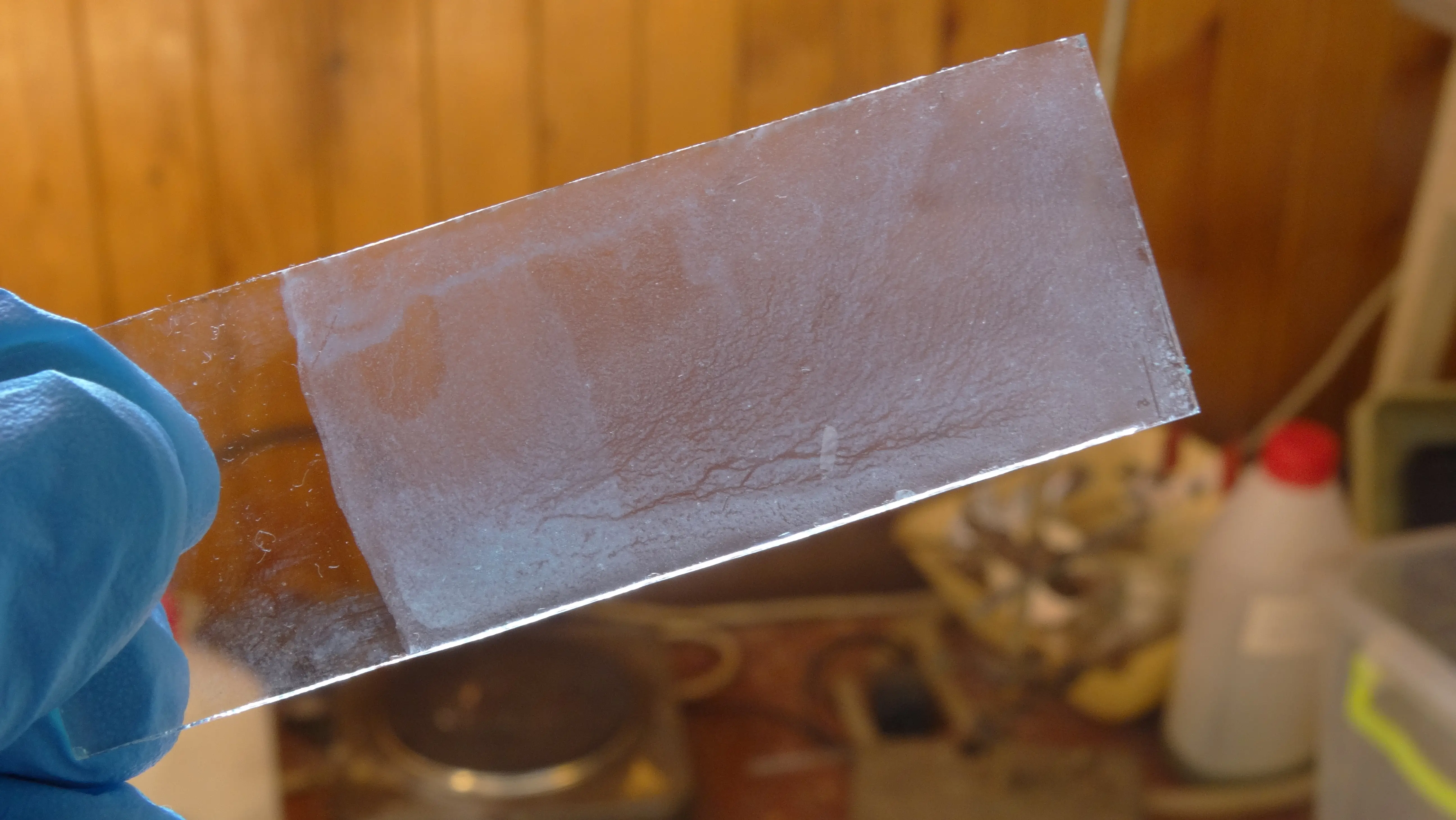
All of our attempts at using this as a photochromic coating were complete and utter failures. We do not have a film applicator so we made attempts at different methods like dip coating, spreading the solution between microscope slides, evaporating in the sun, evaporating in the fridge, evaporating on a hotplate. Nothing worked. Best result was this thin blue sediment on the microscope glass.
We were supposed to skip town in 2 days and we didnt feel like dealing with fumed silica ever again so this end will be loose and untied forever. Unless one of you, yes you, members of the beautiful and smart aryl.org Reader Audience, steps up and does something about this. We believe in you.
Conclusions
Thank you for reading our monthly screed. We hope you are aesthetically and epistemologically satisified with the contents of the article. The pace this piece was finished in was feverish and we had to make several scope cutbacks to get it out in due time as we had 3 other chemistry projects going at the same time. Some of them went as so far as to progress into the “first step optimization” stage. This post is not sponsored by Ray-Ban®, sadly. Our knockoff aviators got almost destroyed in our bag on last month’s vacation, so to creative director of Ray-Ban®, Mr. A$AP Rocky please hit us up we were one of the few who actually thought Testing was really good back in 2018. More chemistry &c to come soon, with less fumed silica involved, we hope.
As mentioned, if you have any suggestions on how to improve the coating process or something fun to do with the photochromic system, don’t be afraid to reach out to us on twitter, fedi or discord (@arylation).
Footnotes
-
RFK Jr. admits to dumping a dead bear in Central Park, solving a decade-old mystery, 2024, NPR ↩
-
What was RFK Jr putting in his drink mid-flight?, 2025, The Independent ↩
-
Szymanski LJ, Hurth K. “Pistachio” and “Avatar” Green-Blue Discoloration of the Brain. Acad Forensic Pathol. 2016 Mar;6(1):150-152. doi: 10.23907/2016.016. Epub 2016 Mar 1. Erratum in: Acad Forensic Pathol. 2017 Dec;7(4):667-704. doi: 10.23907/2015.001a. https://pmc.ncbi.nlm.nih.gov/articles/PMC6474518/) ↩
-
Ramsay RR, Dunford C, Gillman PK. Methylene blue and serotonin toxicity: inhibition of monoamine oxidase A (MAO A) confirms a theoretical prediction. Br J Pharmacol. 2007 Nov;152(6):946-51. https://doi.org/10.1038/sj.bjp.0707430. Epub 2007 Aug 27. PMID: 17721552; PMCID: PMC2078225. ↩
-
Top WM, Gillman PK, de Langen CJ, Kooy A. Fatal methylene blue associated serotonin toxicity. Neth J Med. 2014 Apr;72(3):179-81. https://pubmed.ncbi.nlm.nih.gov/24846936/ ↩
-
Zou, Y.; Chen, J.; Zhang, Y.; Wang, X. Optimization of Reversible Photochromic Coatings Based on Methylene Blue: Formulation Screening, Performance Characterization, and Mechanistic Insights. In Review December 2, 2025. https://doi.org/10.21203/rs.3.rs-8226451/v1 ↩ ↩2
-
Takahiro Suzuki, Fuka Nakamura, Kanon Ie, Masaaki Fujii, Masayuki Inoue; Novel photochromic system using methylene blue reduction with l-ascorbic acid. RSC Adv. 2024; 14 (53): 39708–39714. https://doi.org/10.1039/d4ra07408d ↩
-
this is what the luzon bleeding-heart would look like if it was blue
↩